
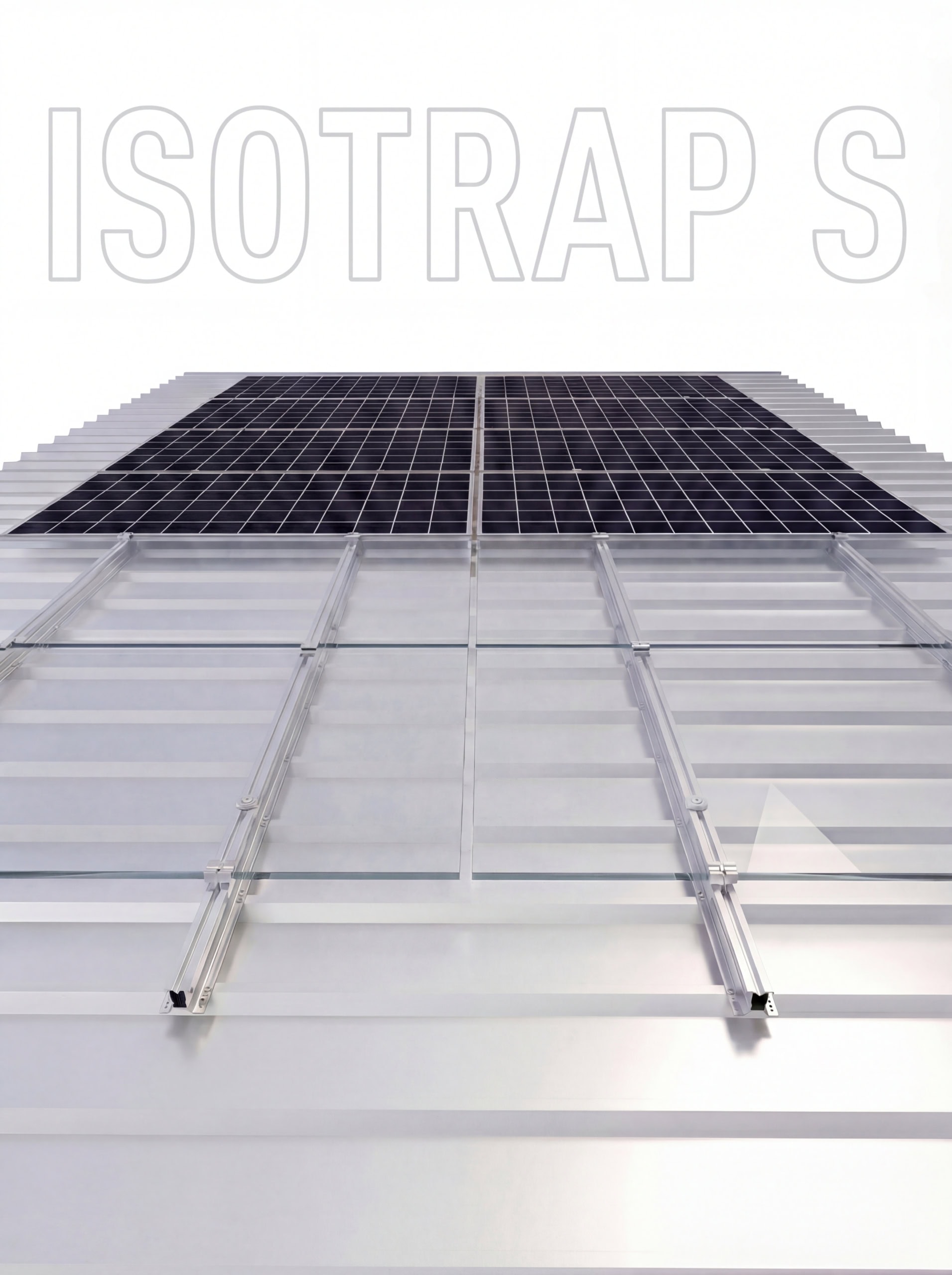
ISOTRAP S
- A low-cost and optimal solution.
- Horizontal and vertical panel placement
- Pre-assembled EPDM sealant.
- 0.8 kg/m² lightweight design
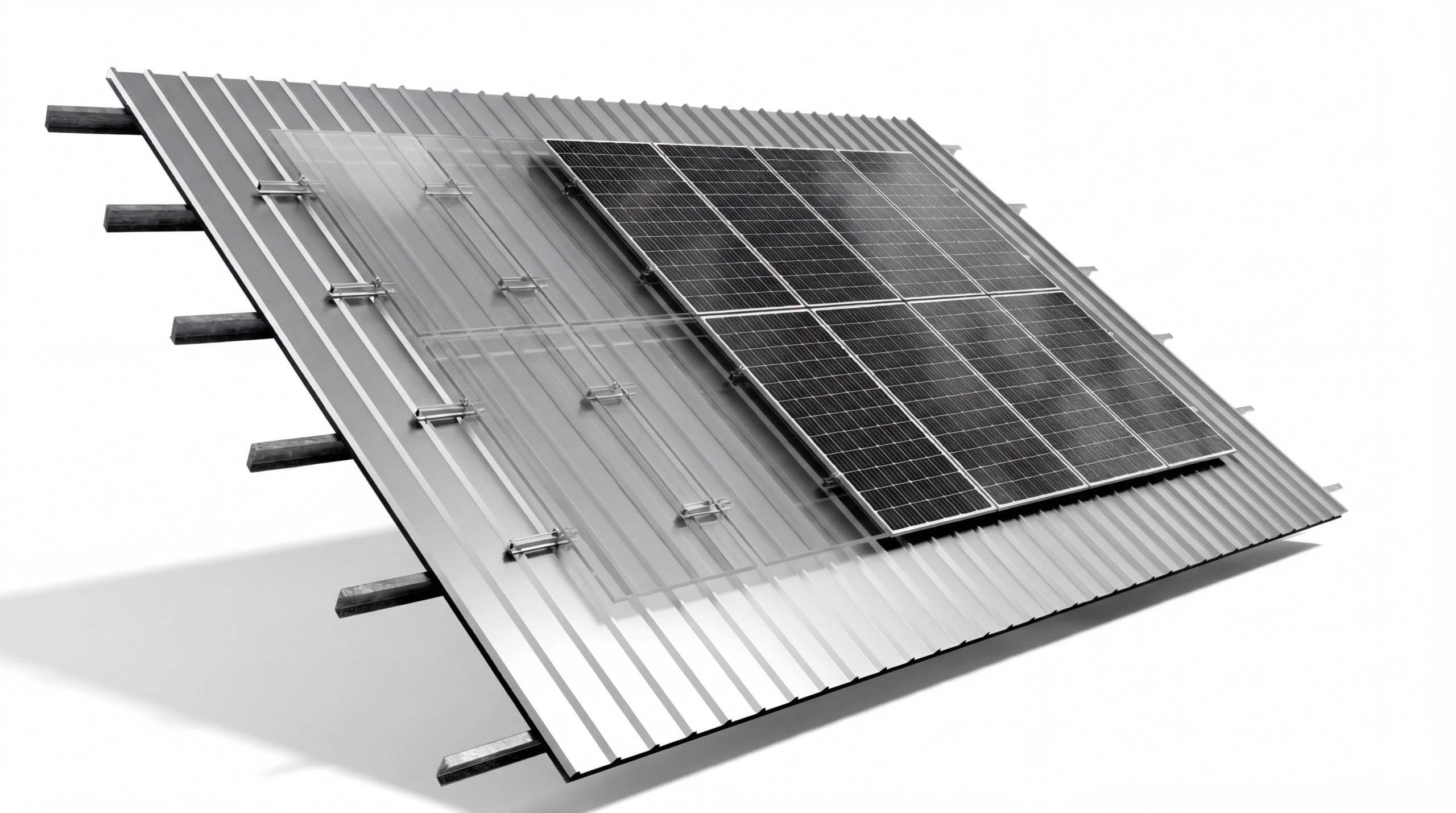
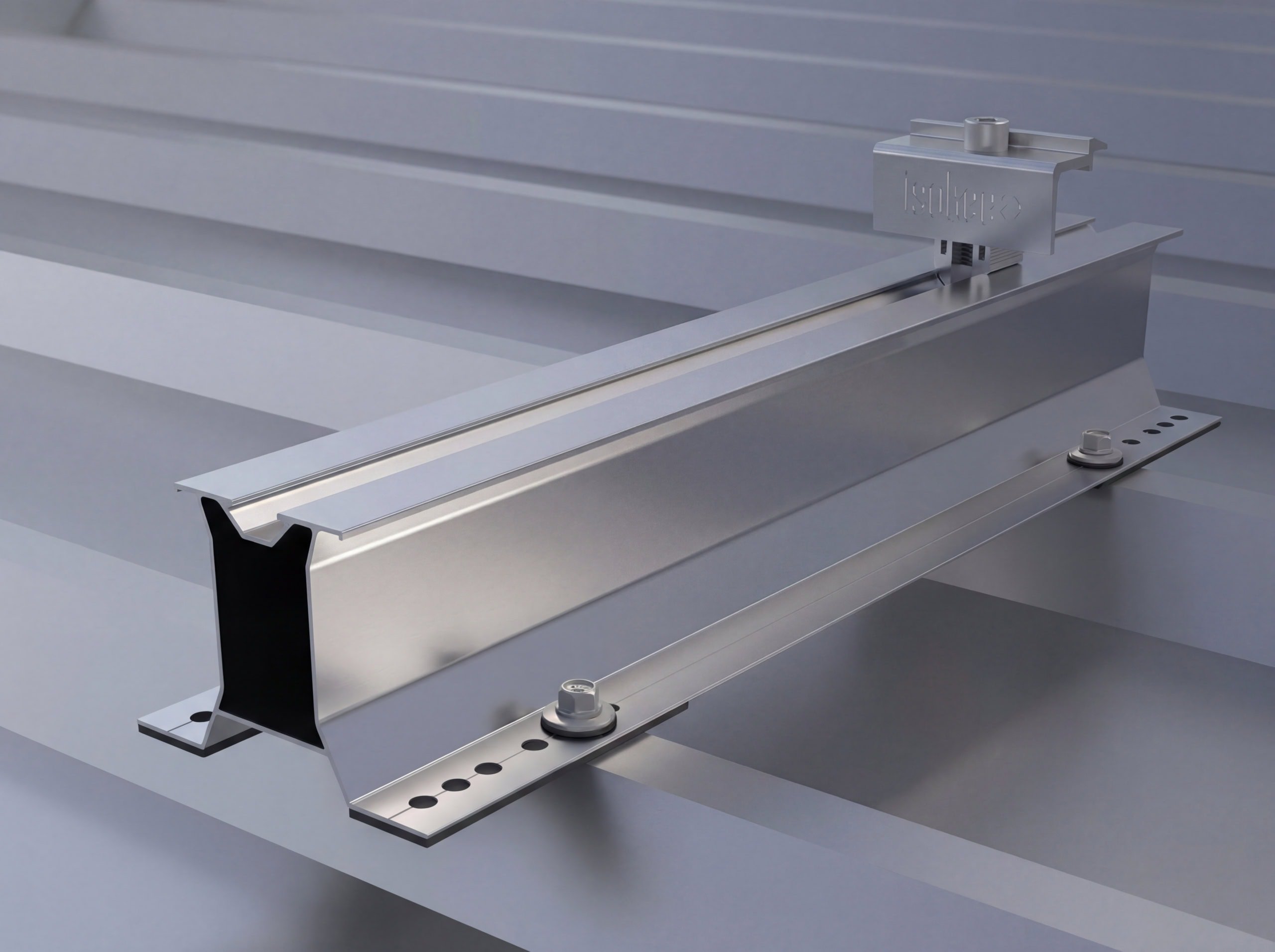
What is ISOTRAP S?
ISOTRAP S is a versatile family of mounting systems designed for mounting solar panels horizontally and vertically on trapezoidal and sandwich-clad industrial roofs.
Available in four different profile heights – S20, S50, S60-NX, and S85 – the system adapts to various roof configurations and load requirements. Each variant is available in standard lengths of 290, 385, and 540 mm, as well as a longer length of 4,300 mm.
Profiles made from aluminum 6063-T66 alloy, EasyClamp universal clamps, sealed pointed screws, and EPDM sealing tapes offer a .9 leak-proof guarantee. Weighing only 0.8 kg per square meter, it places a minimum load on the roof while providing quick and reliable installation thanks to the EasyClamp system.
ISOTRAP S — How Does it Work in the Field?
Click the icon on the video for full screen.
Product Family
Choose the profile height that best suits your project.
Technical Data
| Area of Use | Trapezoidal and sandwich-type pitched roofs |
| Variants | S20 / S50 / S60-NX / S85 |
| Profile Height | 20 / 50 / 60 / 85 mm |
| Profile Width | 86 mm |
| Size Options | 290 / 385 / 540 mm (+ 4,300 mm long length) |
| Panel Size (L) | 640 - 1,960 mm |
| Panel Size (W) | 990 - 1,010 mm |
| Panel Size (H) | 30 - 45 mm |
| Fixing | Sealed pointed screw / Waterproof rivet |
| Profile / Clamp | Aluminum 6063-T66 |
| Support | Aluminum 6063-T66 + EPDM |
| Fasteners | Stainless Steel A2-70 |
| Weight | ≈ 0.8 kg/m² |
| Residential | Horizontal and Vertical |
System Components
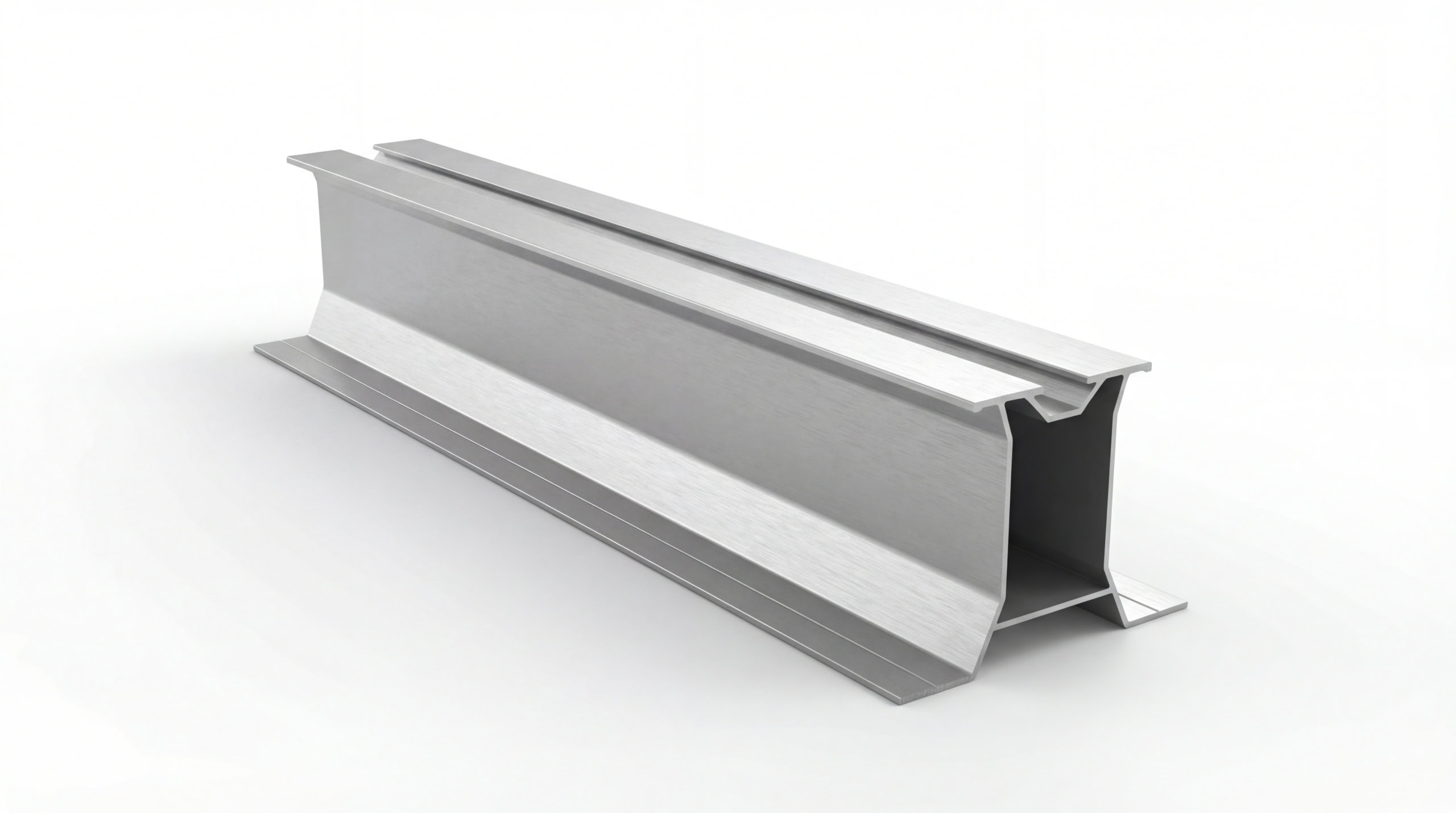
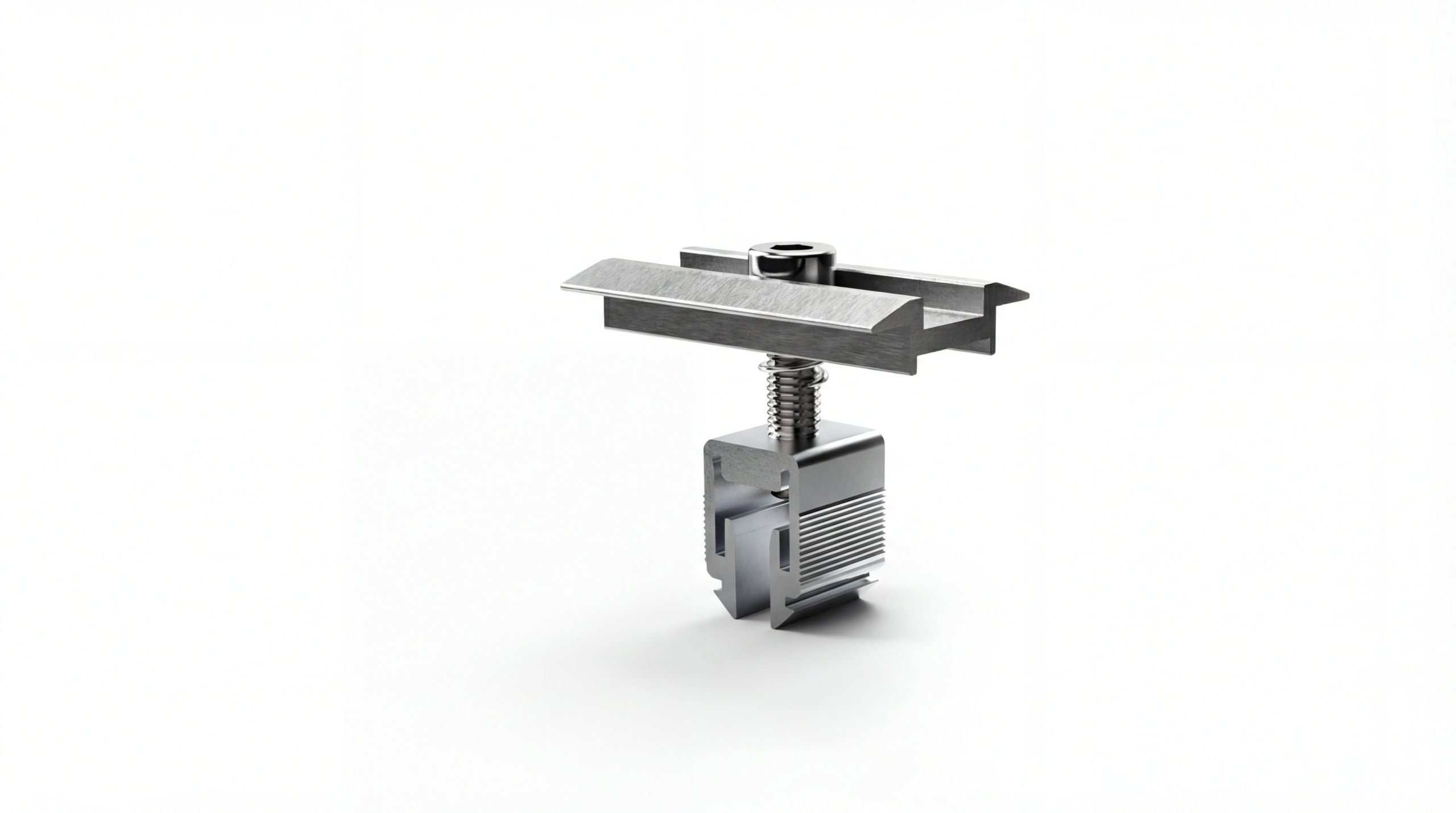
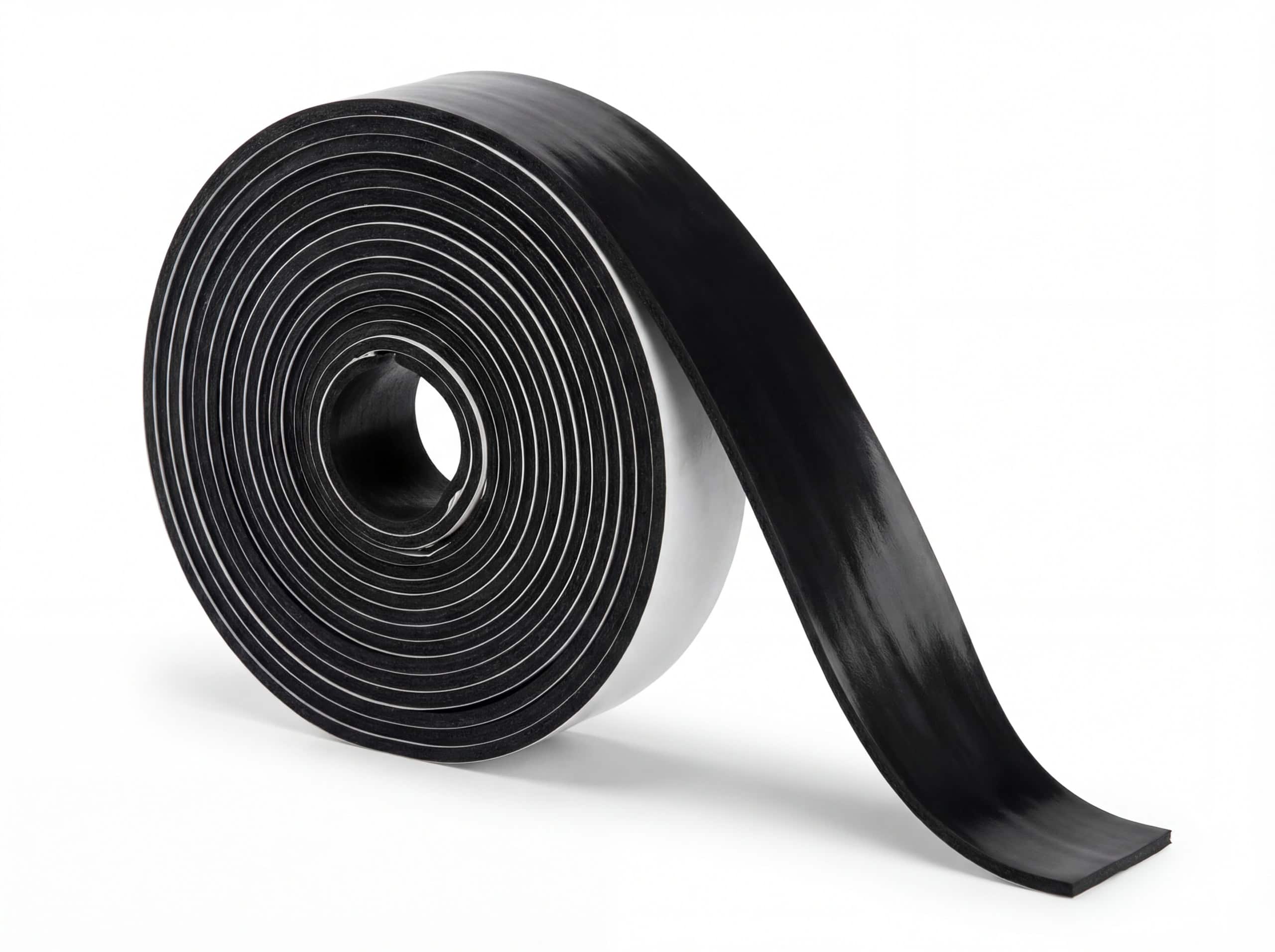
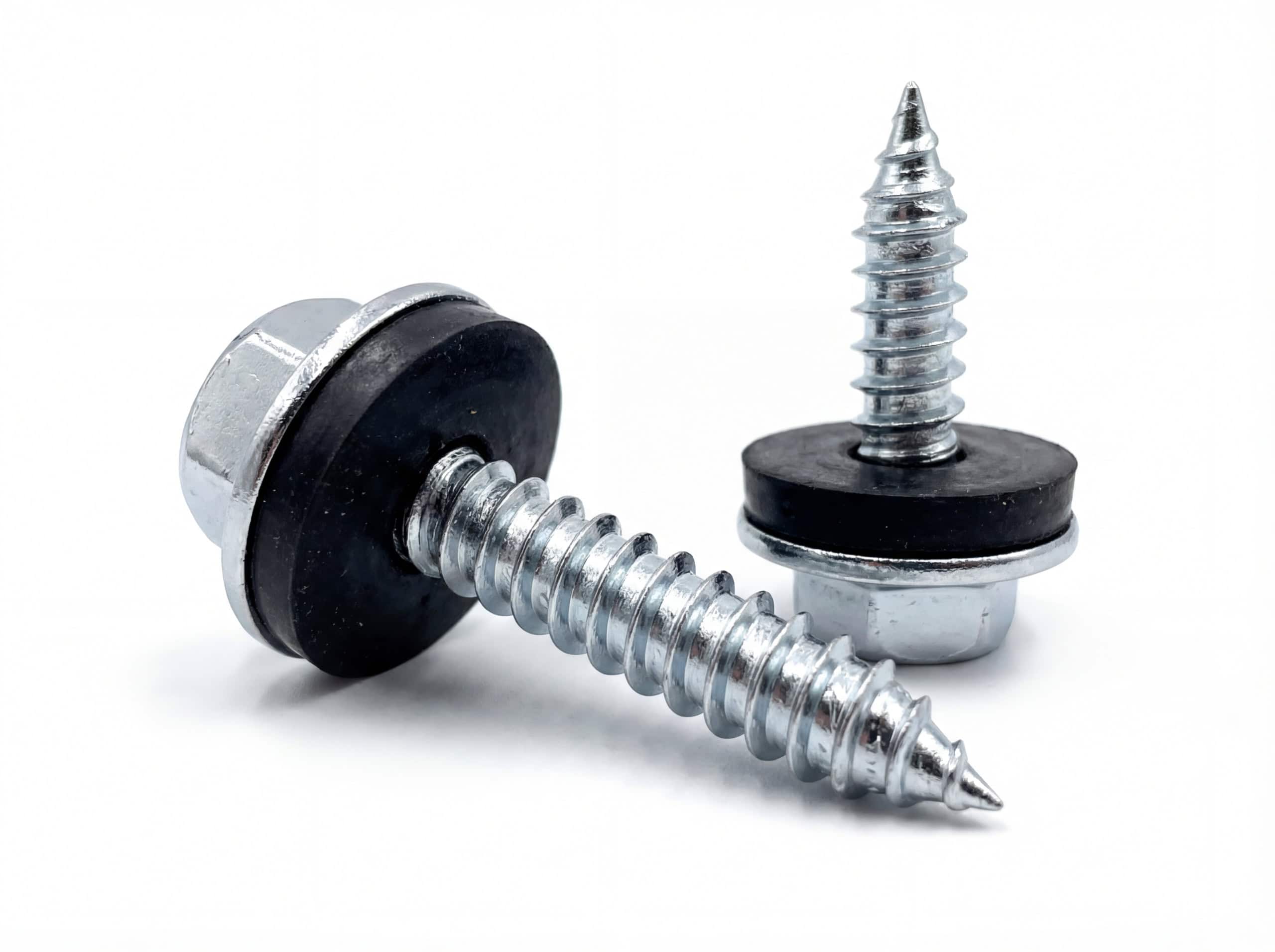
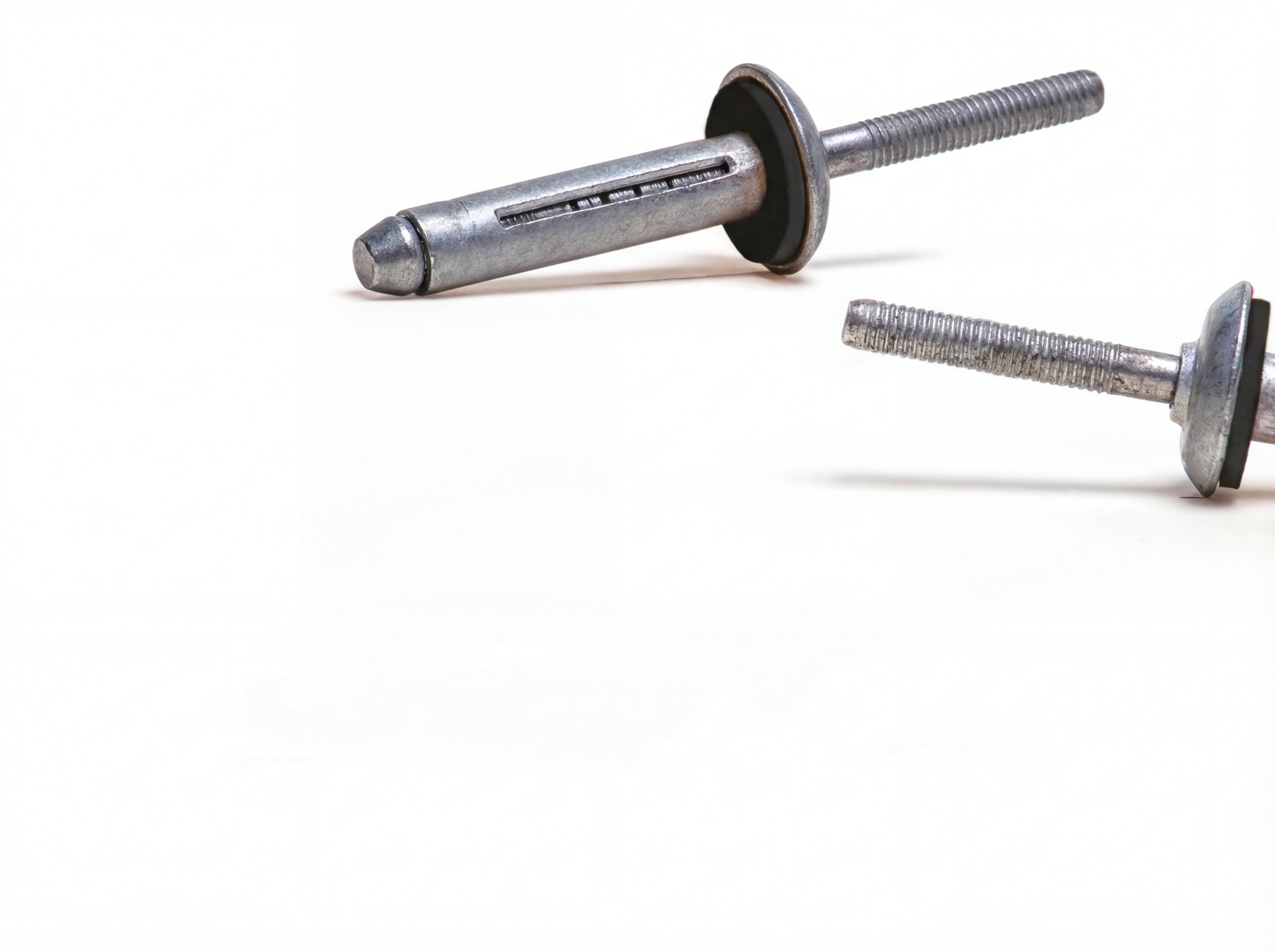
Panel carrier main profile (AL 6063-T66). S20/S50/S60-NX/S85 height options.
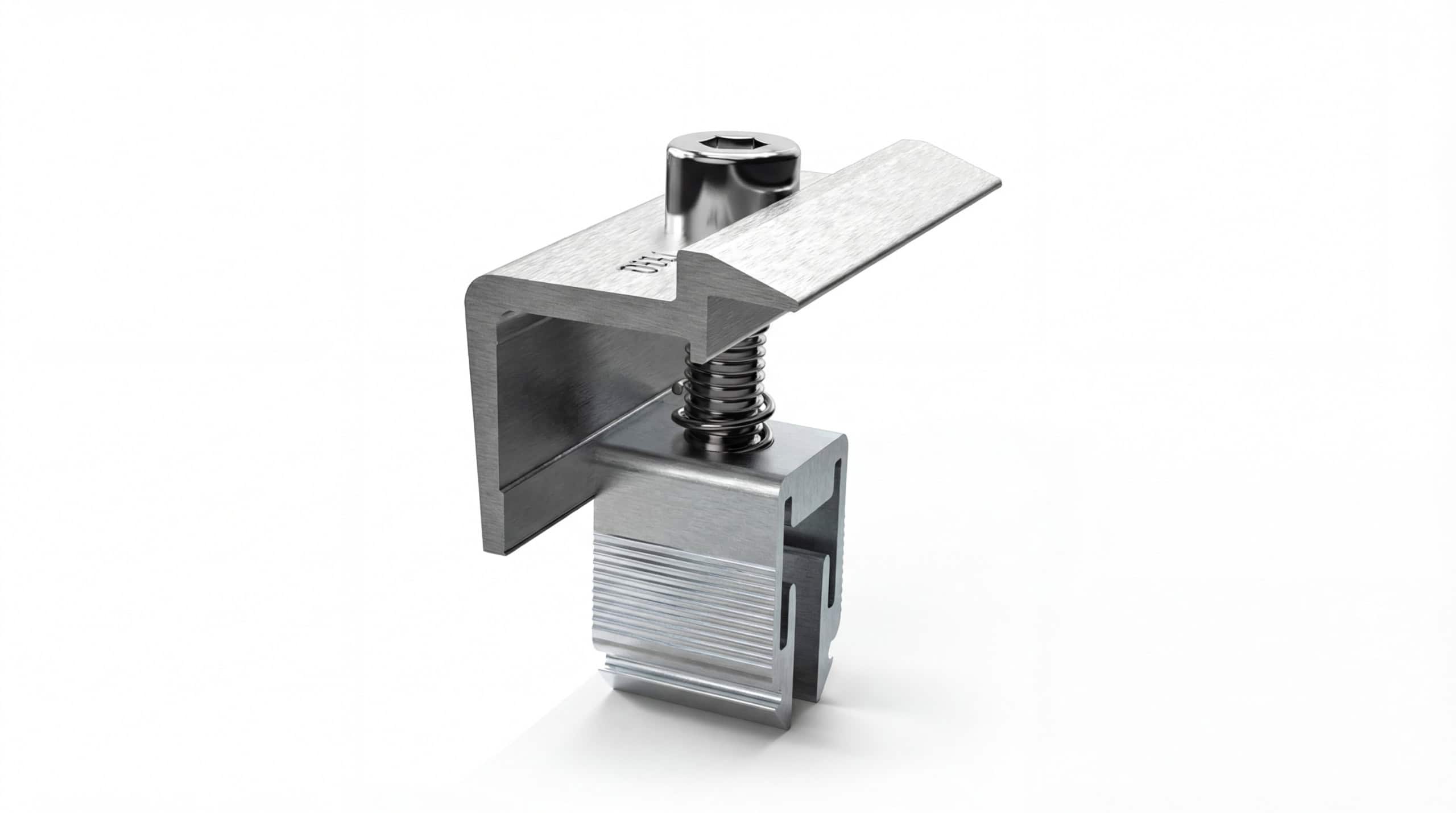
Universal end clamp for the exposed edges of panels. Compatible with 30-45 mm frame PV modules.
Universal center clamp for edges between two panels. Compatible with all ISOTEC systems.
It is glued to the underside of the profile to prevent leakage on the roof surface. (Integrated with the profile in S20)
The gasketed screw prevents leakage, secures the profile, and provides maximum durability.
Special rivet with EPDM protection and .9 seal guarantee. Provides maximum strength by securing the profile.
Easy Assembly
-
1Marking The spacing between the profiles for panel installation is determined and marked on the roof surface to ensure suitability for the panel layout.
-
2Profile Placement ISOTRAP S profiles are placed on the ribs either by gluing the EPDM part (S50/S60-NX/S85) or directly (S20) according to the marking.
-
3Fixing Sealed pointed screws or waterproof rivets are mounted vertically to the roof at the points where they align with the corrugation. The opening of the seal should be observed.
-
4Clamp Assembly EasyClamp End (outer edges) or EasyClamp Mid (between panels) holders are installed on the assembled profiles, taking their positions into consideration.
-
5Panel Assembly The panels are fitted onto the profiles, and the panel assembly is completed by tightening the Allen bolts on the EasyClamp holders with a torque of 14-17 Nm.
Technical Documents
Download all technical documentation for the product.
Let's work together to determine the most suitable ISOTRAP S variant for your project.
BF Device · Bifacial Shading Advantage
There are two different approaches in the industry. Why is ISOTEC's BF apparatus both economical and high-performing?
Why is shading important in bifacial panels?
Bifacial (double-sided) solar panels generate electricity from both their front and back surfaces. The back surface captures radiation reflected from the ground and coming from the side edges — typically. -20 additional production provides.
The critical point: Any part (purlin, beam, cable) that blocks light falling on the back surface of the panel → on the back surface shadow lines It creates a shadow, and the cells under this shadow lose productivity. Between the purlin and the panel... distance and the purlin cross-sectional area These are the determining parameters.
Therefore, to get the most out of a bifacial investment, the design of the mounting system is critical.
Two Design Philosophies in the Industry
There are two main approaches in the industry to reduce bifacial shadowing:
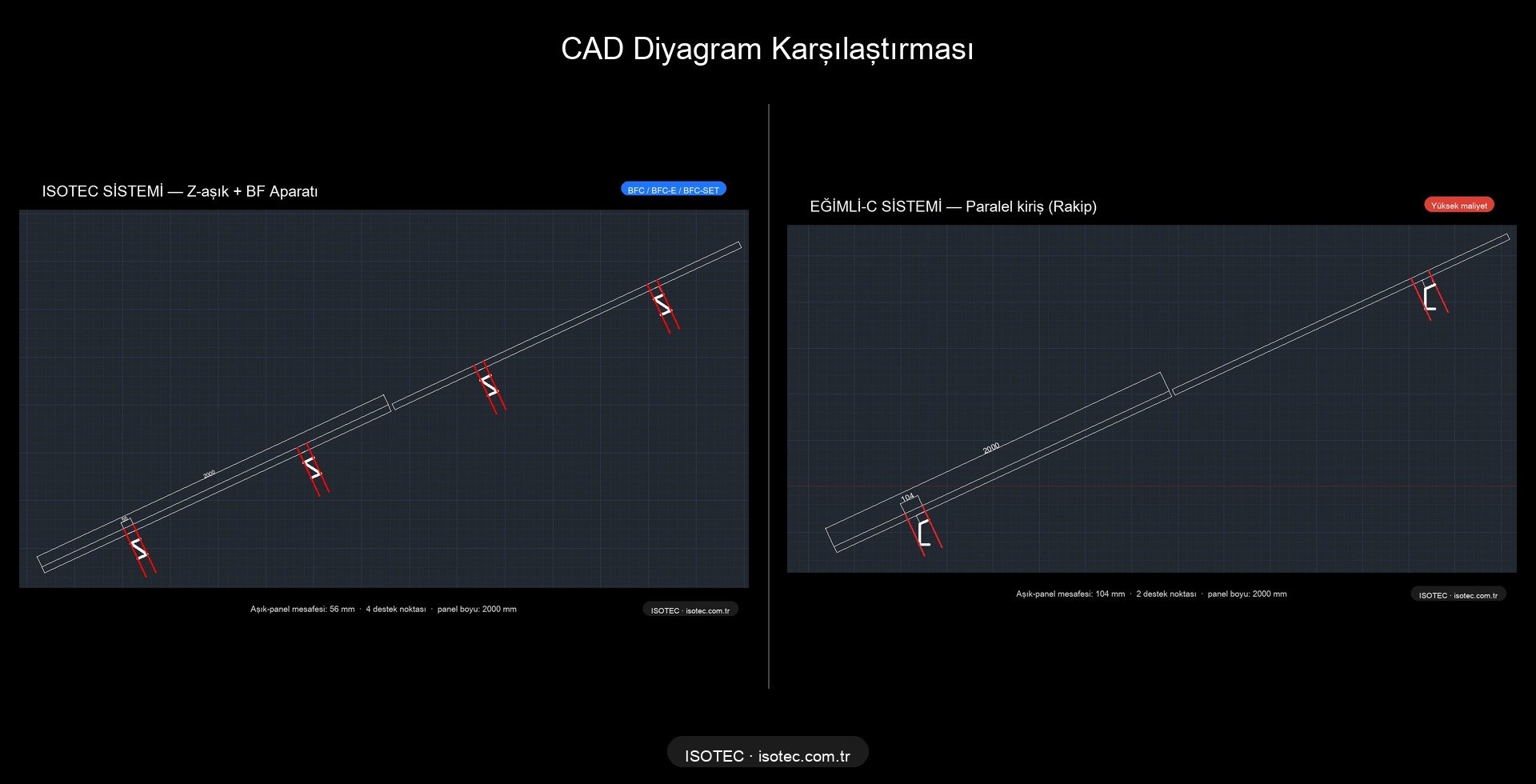
Inclined C-Beam competitors
The beam runs parallel to the panel at the same angle. A single long C-profile provides grip along the panel.
- ✓ Minimal shade, high bifacial yield.
- ✗ Long steel beams, high material costs.
- ✗ In sloping structures, column heights vary.
- ✗ Tolerances are tight, assembly takes a long time.
Vertical Beam + Horizontal Z-Purlin ISOTEC + BF
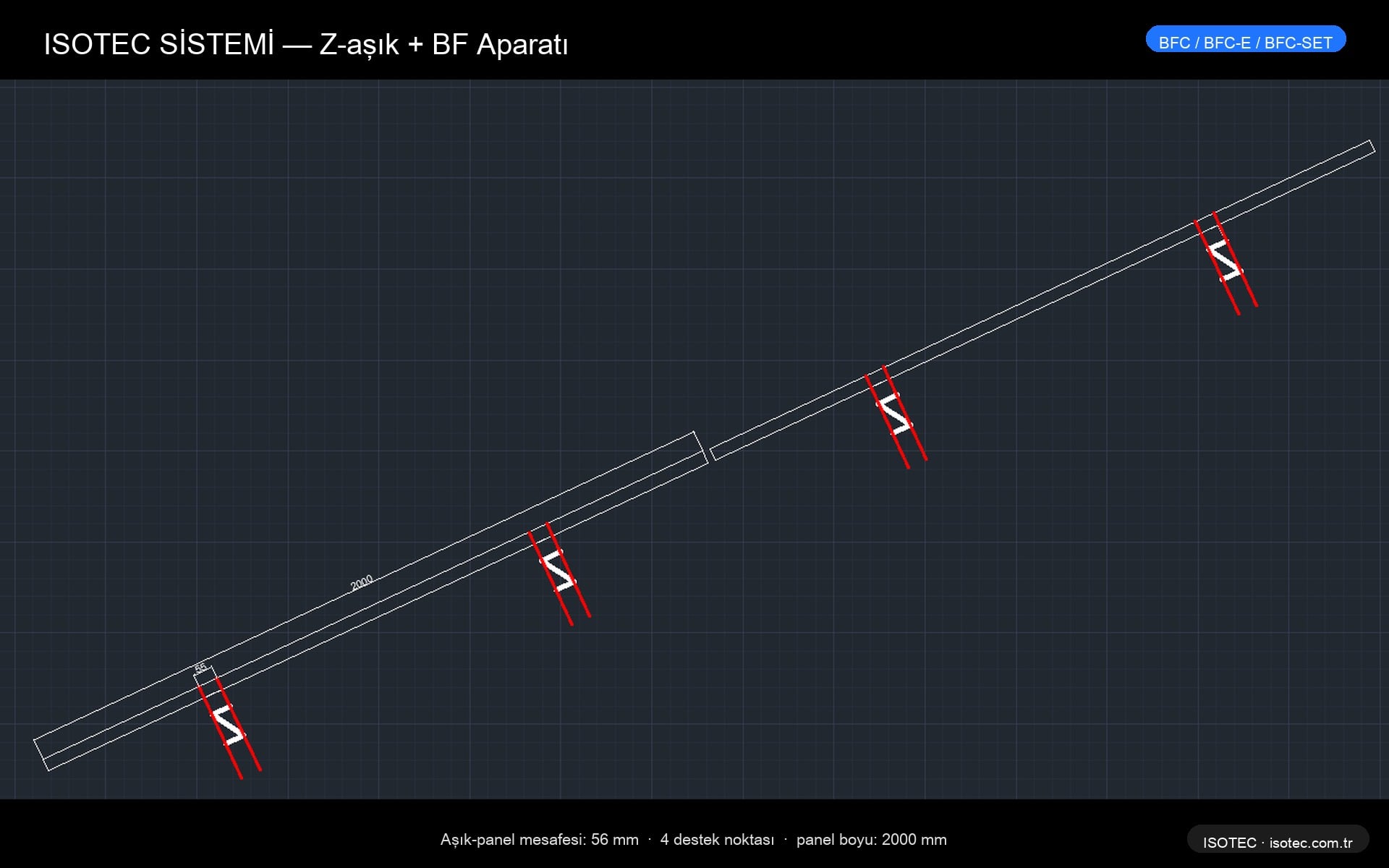
The beams are vertical (perpendicular to the ground, short). The Z-profile purlins extend horizontally. A BF 56 mm spacer is inserted between the purlin and the panel.
- ✓ Low steel content, quick assembly, economical.
- ✓ Bifacial performance with BF apparatus and Inclined-C equal
- ✓ Standard column, easy supply.
- ✓ Slot design compatible with thermal expansion.
CAD comparison — purlin-panel distances
How does the BF adapter work?
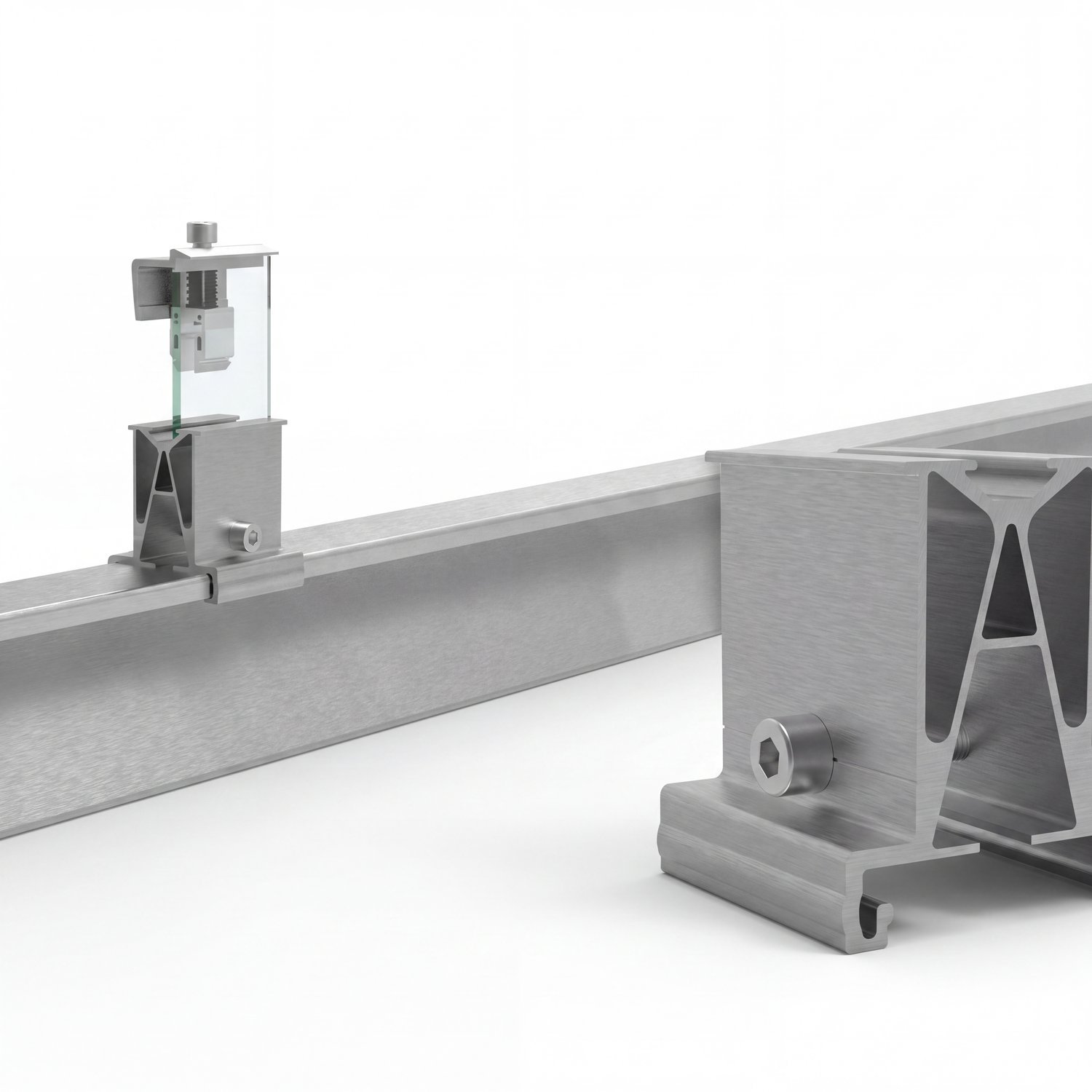
The ISOTEC BF adapter is a device placed between the Z-shaped purlin and the bottom surface of the panel. spacer + clamp systemIt maximizes the radiation falling on the back surface of the panel by creating a distance of 56 mm.
Design features
- Spacer body: EN AW-6005A T6 anodized aluminum (3.0 mm wall)
- Distance: The distance between the purlin's top surface and the panel's bottom surface is 56 mm.
- Slot design: Panel thermal expansion accommodated (±2 mm tolerance)
- Screw: Stainless steel A2 M8×40 hexagonal
Clamp variations
| Code | Medicine | Use |
|---|---|---|
| BFC | Glass-to-glass edge | For frameless glass-to-glass panels at panel edges. |
| BFC-E | Medium grip | Center panel, shared grip, frameless. |
| BFC-SET | Complete set | All components are pre-packaged, quick assembly. |
CAD details — ISOTEC system
Bifacial Radiance Simulation Results
The results are from NREL's (US National Renewable Energy Laboratory) open-source program. Bifacial Radiance This was achieved using a Python library. A scanner-based radiation calculation is performed that accurately reflects field conditions.
Heat map comparison
Warm (yellow) colors indicate high irradiation (1.77 MWh/m² annually), while cool (blue) colors indicate shaded areas. In both systems, the front surface of the panel (the upper yellow area) receives homogeneous irradiation; the difference is the panel. on the back surface It is seen.
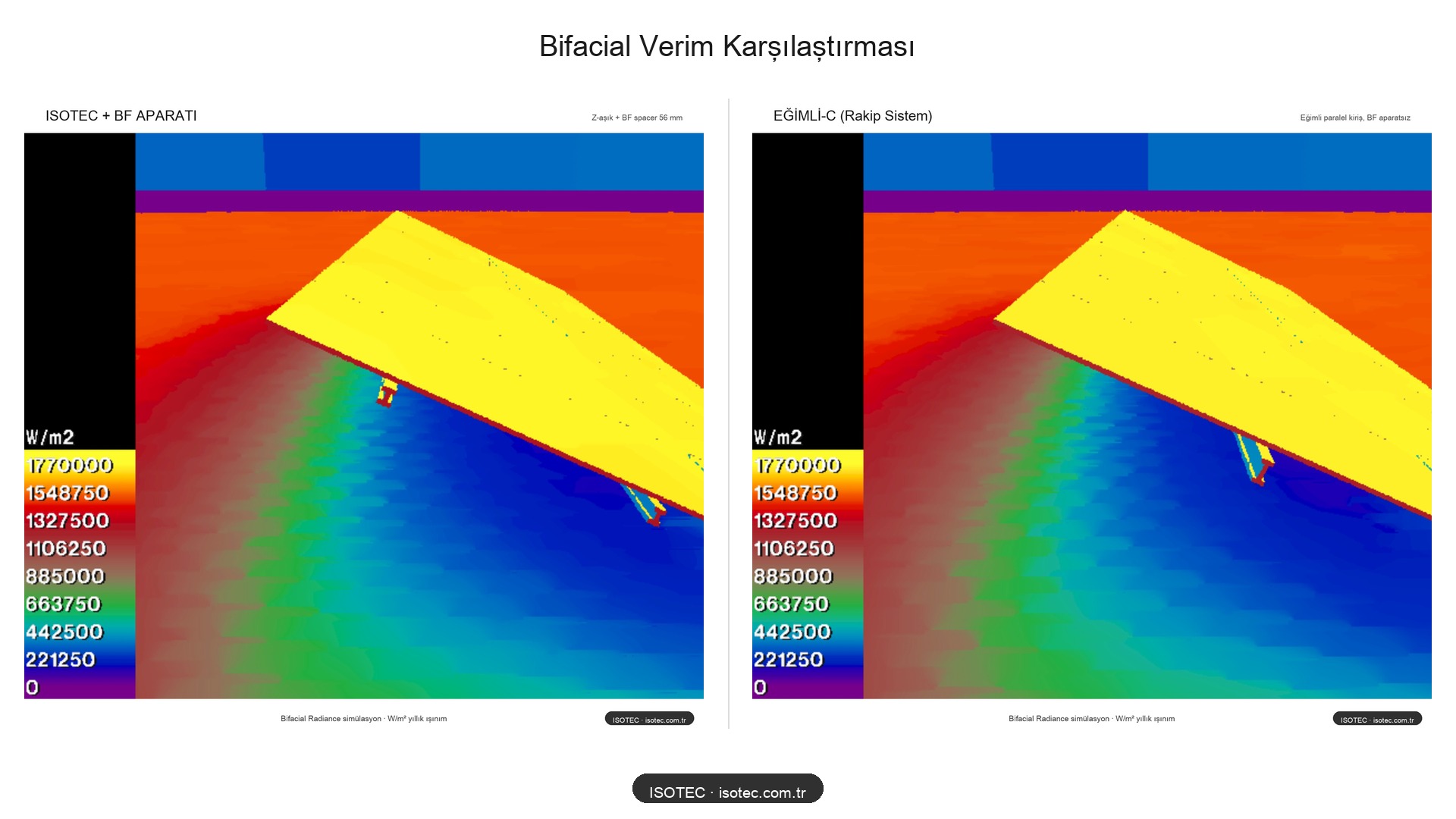
Numerical results
| System | Bifacial Gain | Shadow Line | Cost |
|---|---|---|---|
| Sloping-C (Opponent) | ~%18-20 | 1 big | 💰💰💰 High |
| ISOTEC + BF Adapter | %18 | 2 small | 💰 Economical |
| ISOTEC (without BF adapter) | ~%10-12 | 2 nearby shadows | 💰 Lowest |
The same bifacial production, shorter beam, less steel, faster assembly. The cost difference is significant at the field scale.