
 Isotec Energy
ISOTRAP MINI V3
- New optimized design
- An economical and reliable solution.
- Front-adhesive EPDM tape
What is ISOTRAP MINI V3?
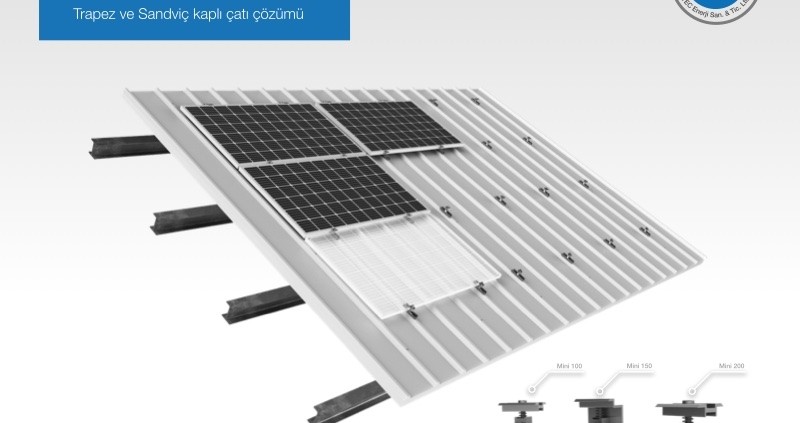
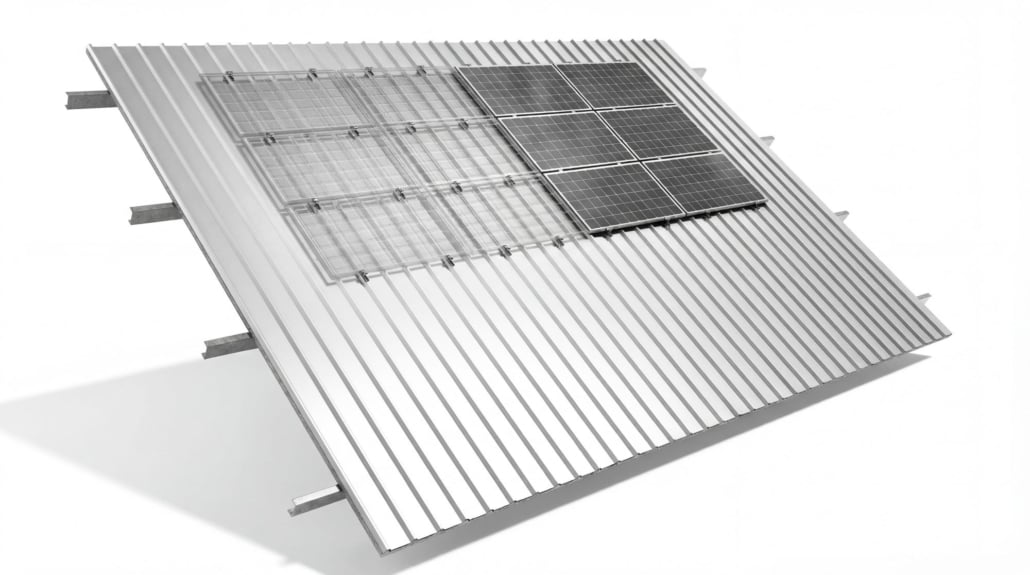
ISOTRAP MINI V3 is a compact mounting system designed for horizontal solar panel installation on trapezoidal and sandwich-clad industrial roofs.
Rails and clamps, manufactured from aluminum 6063-T66 alloy, are calculated according to EUROCODE standards. Corrosion-resistant stainless steel A2-70 fasteners and bimetal screws ensure a long-lasting assembly.
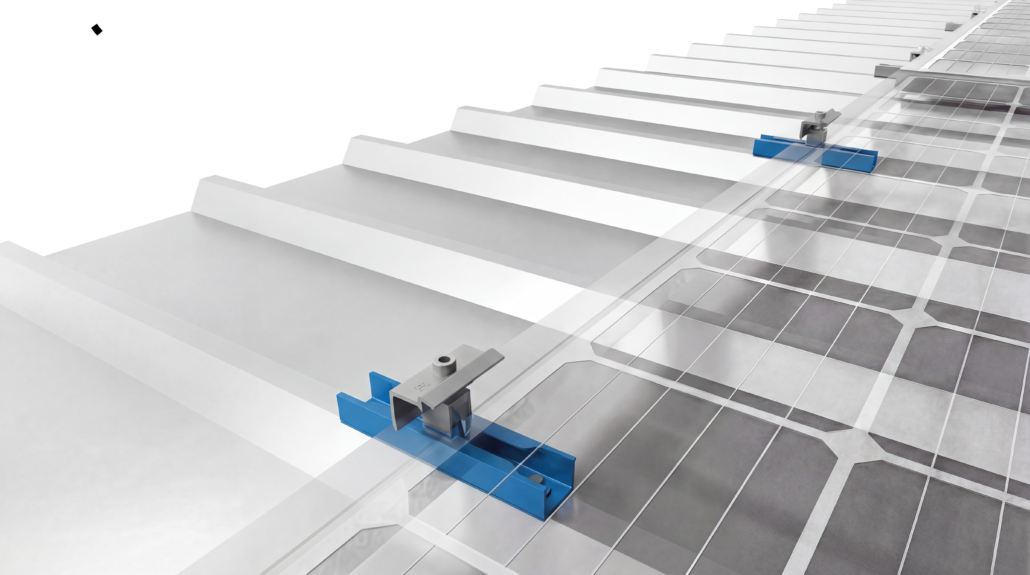
The system prevents water leakage on the roof surface thanks to pre-adhesive EPDM sealing tapes, while the pre-assembled EasyClamp clamps allow for faster installation compared to traditional systems. Weighing only 0.45 kg per square meter, it places a minimal load on the roof.
ISOTRAP MINI V3 — How it Works in the Field?
Click the icon on the video for full screen.
Technical Data
| Area of Use | Trapezoidal and sandwich-type roofs |
| Panel Size (L) | 1,500 mm - 2,384 mm |
| Panel Size (W) | 990 mm - 1,330 mm |
| Panel Size (H) | 30 mm - 45 mm |
| Fixing | Sealed pointed screw / Rivet |
| Profile / Clamp | Aluminum 6063-T66 |
| Gasket | EPDM |
| Fasteners | Stainless Steel A2-70 & Bimetal |
| Groove Spacing | Max. 285 mm |
| Residential | Horizontal |
System Components
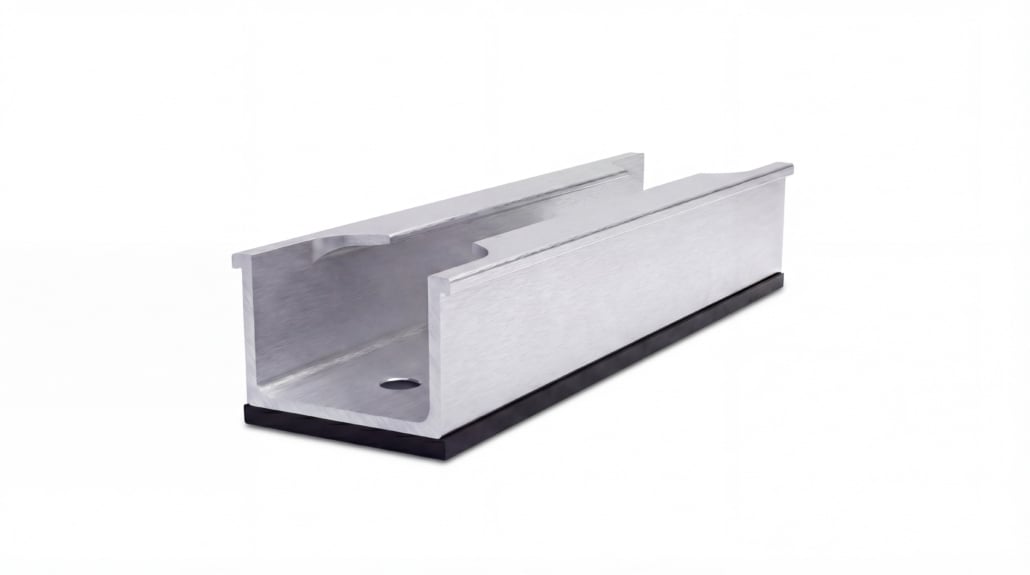
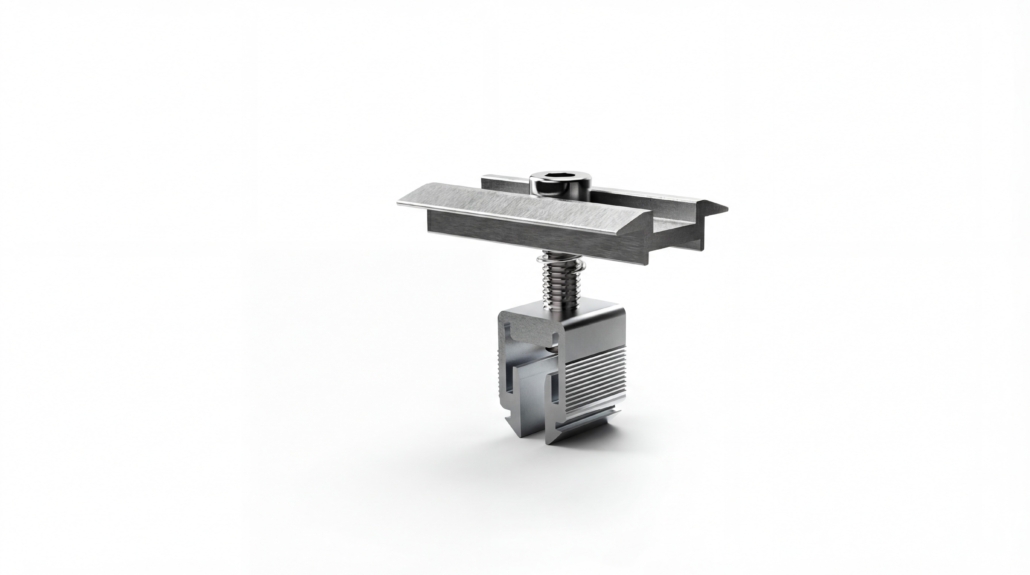
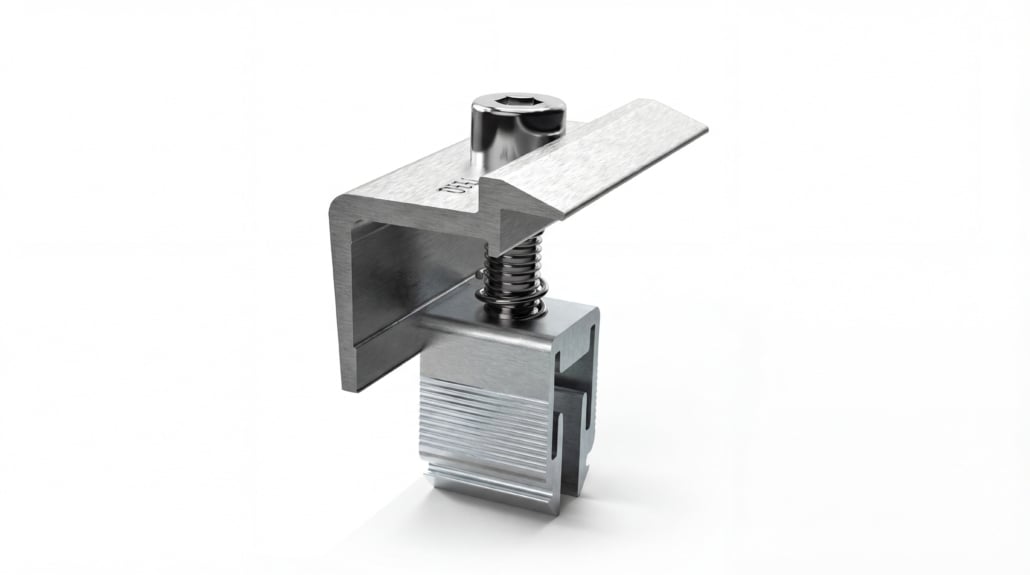
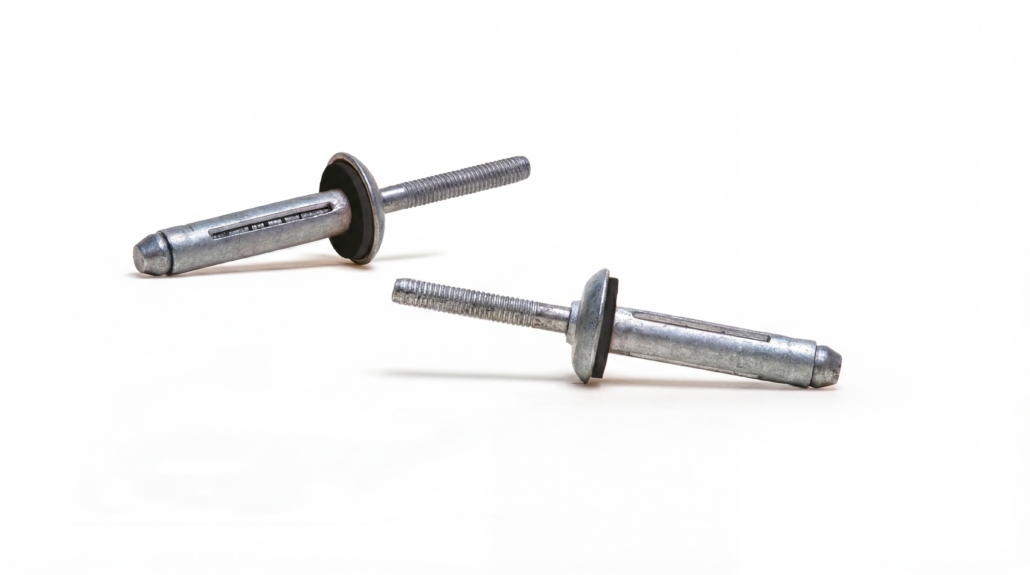
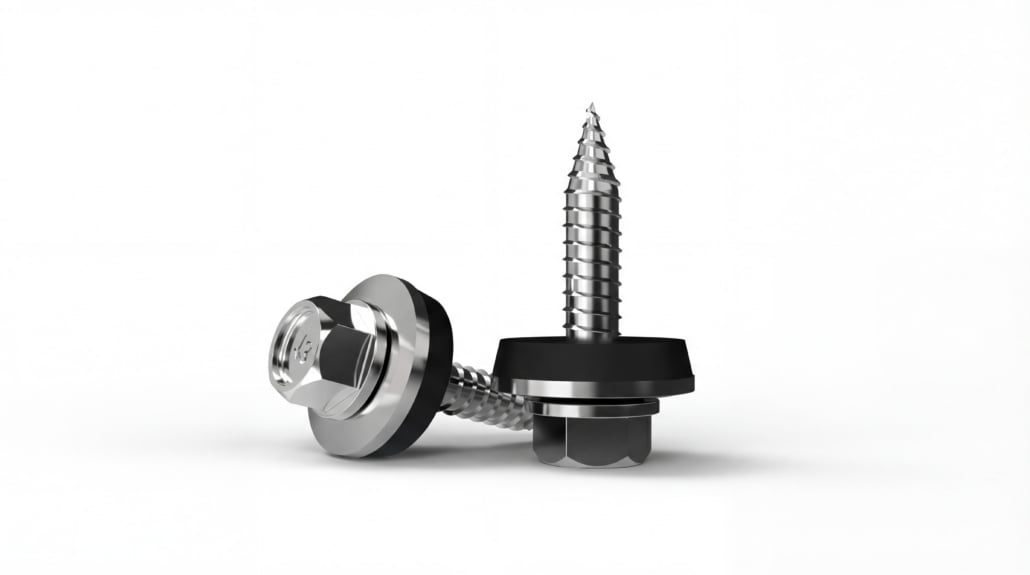
Main mounting profile (AL 6063-T66)
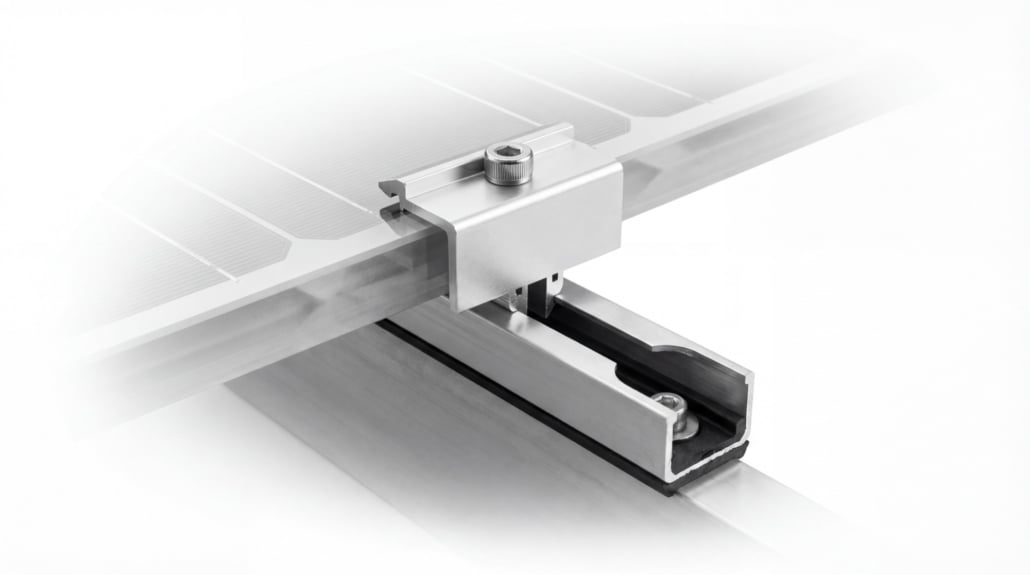
Inter-panel fixing clamp
Outer edge fixing clamp
Fixing to the roof surface.
Alternative fastening element
Easy Assembly
-
1Secure the rails. Secure the ISOTRAP Mini V3 rails to the trapezoidal roof corrugations using pre-sealed pointed screws.
-
2Install the panels. Place the solar panels horizontally on the rails. Ensure that the panel edges fit into the clamp slots.
-
3Lock with handcuffs Secure the panels with EasyClamp Middle and End clamps. Apply a tightening torque of 5-25 Nm using a torque wrench.
Technical Documents
Download all technical documentation for the product.
Would you like to receive more detailed information about this system?
BF Device · Bifacial Shading Advantage
There are two different approaches in the industry. Why is ISOTEC's BF apparatus both economical and high-performing?
Why is shading important in bifacial panels?
Bifacial (double-sided) solar panels generate electricity from both their front and back surfaces. The back surface captures radiation reflected from the ground and coming from the side edges — typically. -20 additional production provides.
The critical point: Any part (purlin, beam, cable) that blocks light falling on the back surface of the panel → on the back surface shadow lines It creates a shadow, and the cells under this shadow lose productivity. Between the purlin and the panel... distance and the purlin cross-sectional area These are the determining parameters.
Therefore, to get the most out of a bifacial investment, the design of the mounting system is critical.
Two Design Philosophies in the Industry
There are two main approaches in the industry to reduce bifacial shadowing:
Inclined C-Beam competitors
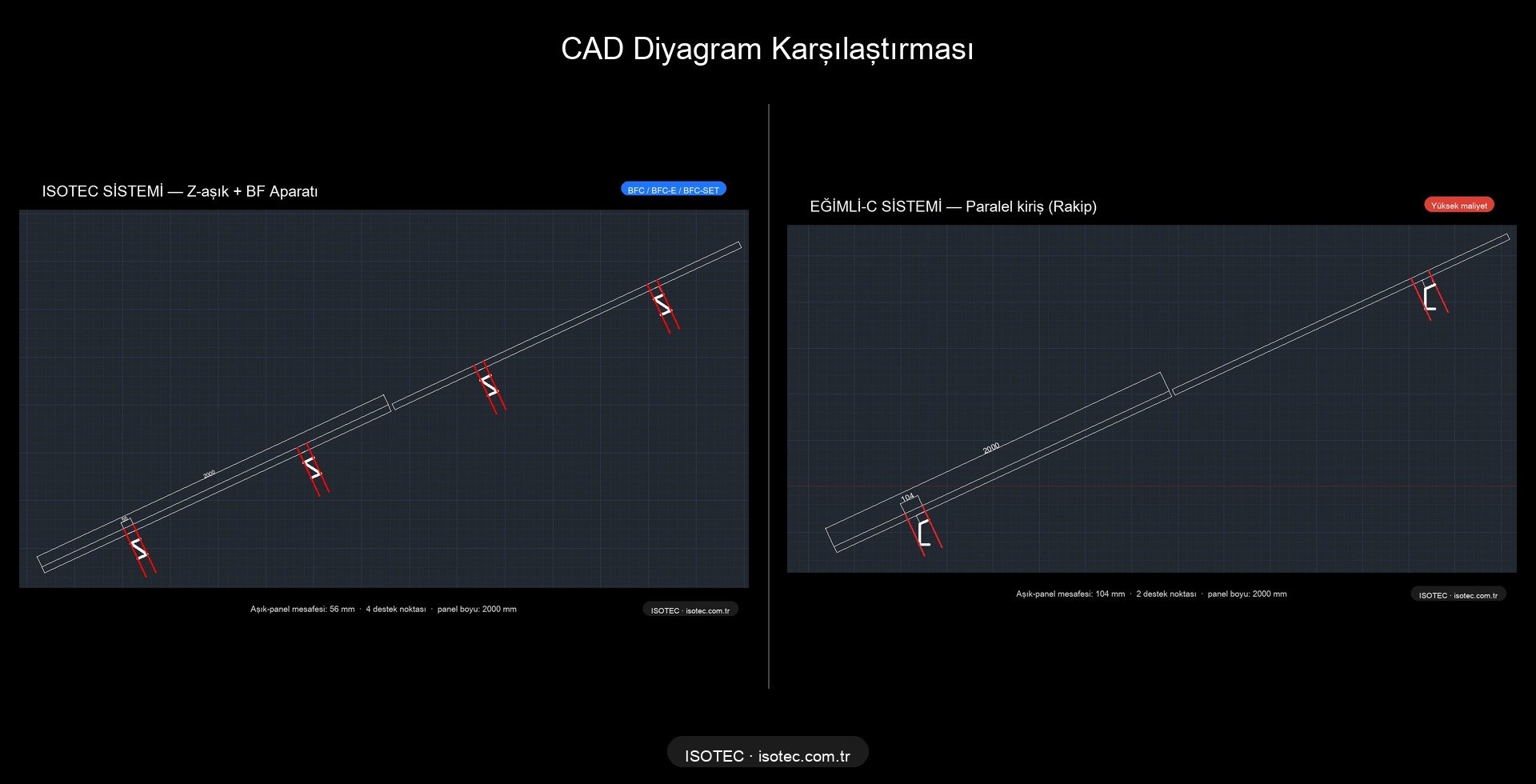
The beam runs parallel to the panel at the same angle. A single long C-profile provides grip along the panel.
- ✓ Minimal shade, high bifacial yield.
- ✗ Long steel beams, high material costs.
- ✗ In sloping structures, column heights vary.
- ✗ Tolerances are tight, assembly takes a long time.
Vertical Beam + Horizontal Z-Purlin ISOTEC + BF
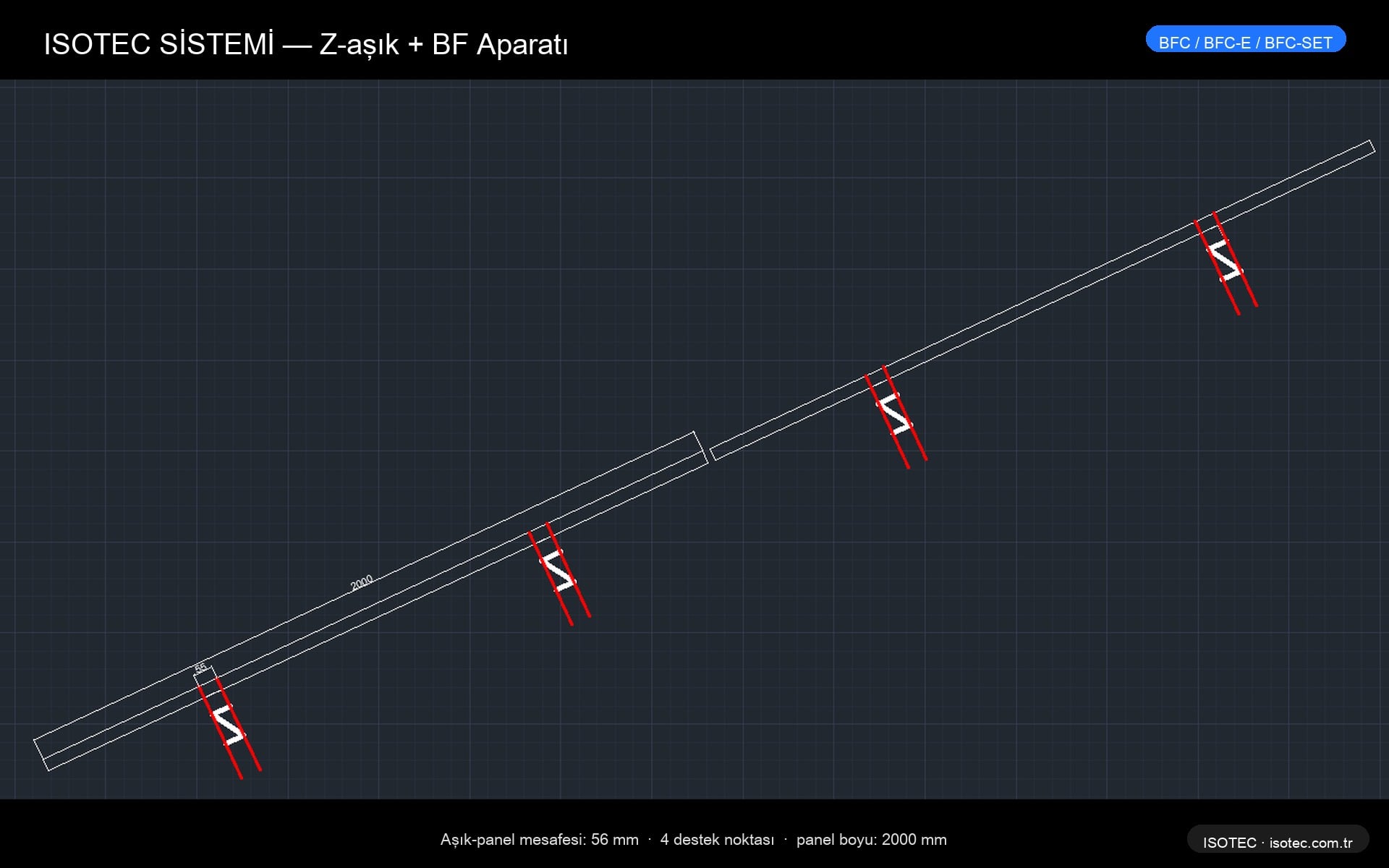
The beams are vertical (perpendicular to the ground, short). The Z-profile purlins extend horizontally. A BF 56 mm spacer is inserted between the purlin and the panel.
- ✓ Low steel content, quick assembly, economical.
- ✓ Bifacial performance with BF apparatus and Inclined-C equal
- ✓ Standard column, easy supply.
- ✓ Slot design compatible with thermal expansion.
CAD comparison — purlin-panel distances
How does the BF adapter work?
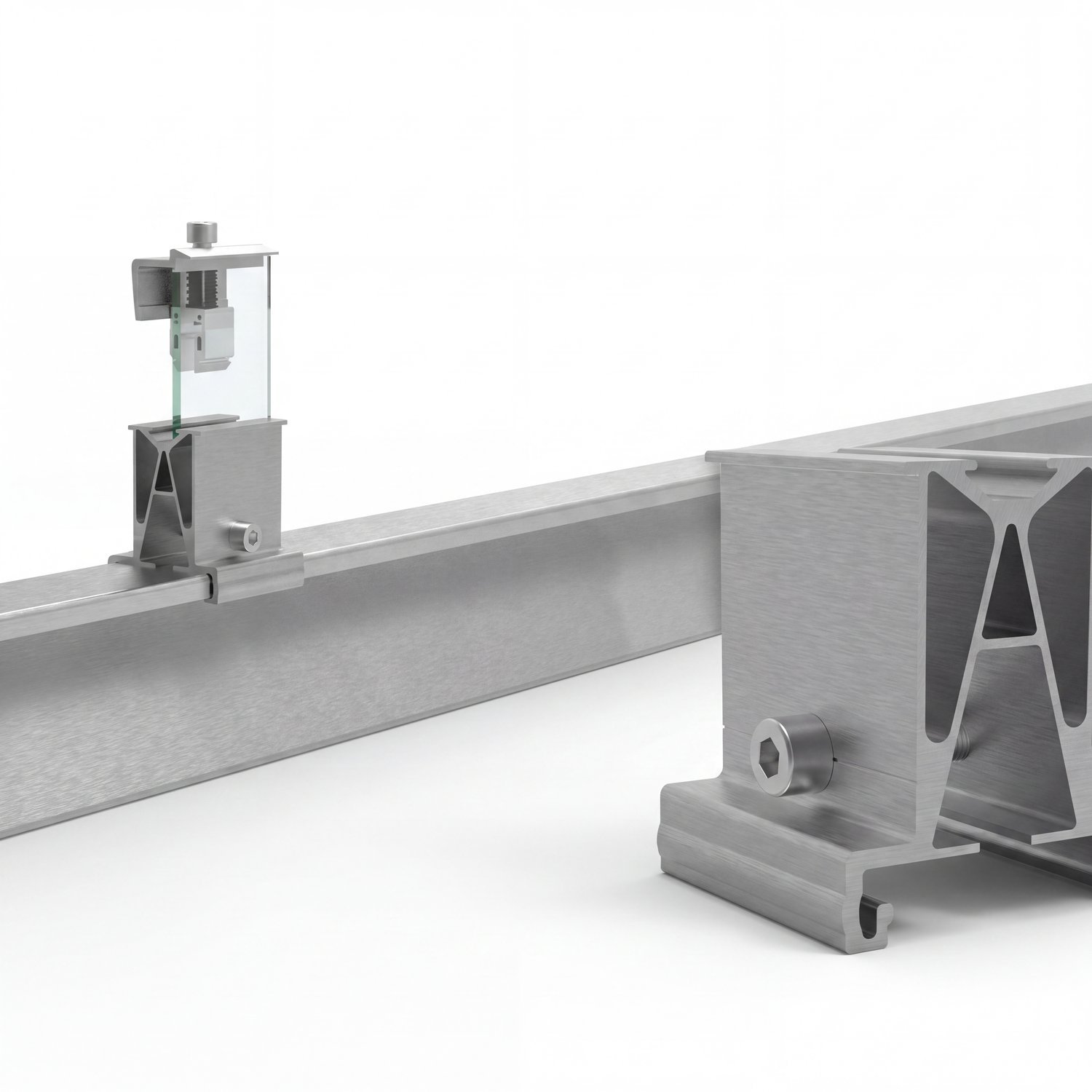
The ISOTEC BF adapter is a device placed between the Z-shaped purlin and the bottom surface of the panel. spacer + clamp systemIt maximizes the radiation falling on the back surface of the panel by creating a distance of 56 mm.
Design features
- Spacer body: EN AW-6005A T6 anodized aluminum (3.0 mm wall)
- Distance: The distance between the purlin's top surface and the panel's bottom surface is 56 mm.
- Slot design: Panel thermal expansion accommodated (±2 mm tolerance)
- Screw: Stainless steel A2 M8×40 hexagonal
Clamp variations
| Code | Medicine | Use |
|---|---|---|
| BFC | Glass-to-glass edge | For frameless glass-to-glass panels at panel edges. |
| BFC-E | Medium grip | Center panel, shared grip, frameless. |
| BFC-SET | Complete set | All components are pre-packaged, quick assembly. |
CAD details — ISOTEC system
Bifacial Radiance Simulation Results
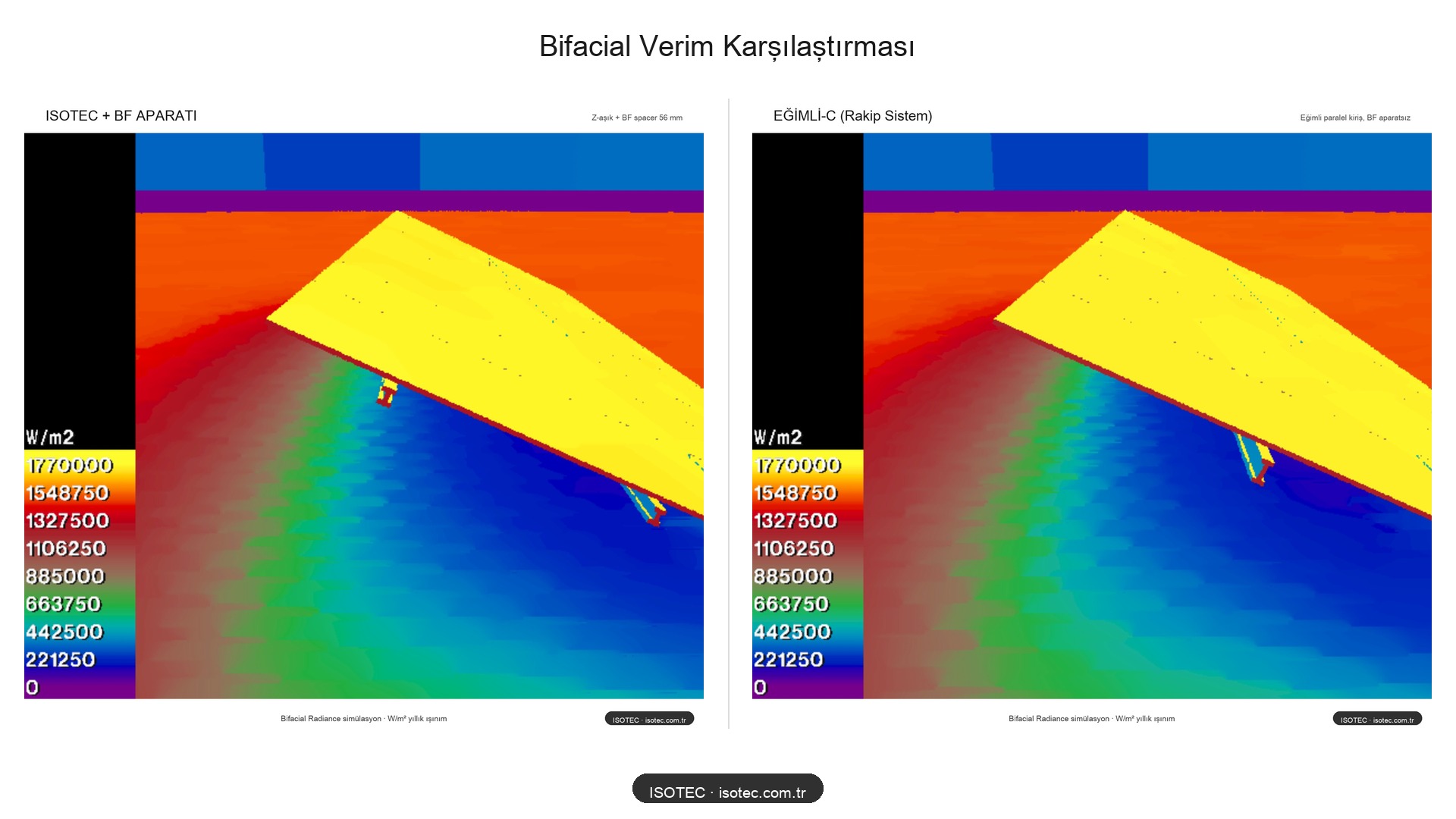
The results are from NREL's (US National Renewable Energy Laboratory) open-source program. Bifacial Radiance This was achieved using a Python library. A scanner-based radiation calculation is performed that accurately reflects field conditions.
Heat map comparison
Warm (yellow) colors indicate high irradiation (1.77 MWh/m² annually), while cool (blue) colors indicate shaded areas. In both systems, the front surface of the panel (the upper yellow area) receives homogeneous irradiation; the difference is the panel. on the back surface It is seen.
Numerical results
| System | Bifacial Gain | Shadow Line | Cost |
|---|---|---|---|
| Sloping-C (Opponent) | ~%18-20 | 1 big | 💰💰💰 High |
| ISOTEC + BF Adapter | %18 | 2 small | 💰 Economical |
| ISOTEC (without BF adapter) | ~%10-12 | 2 nearby shadows | 💰 Lowest |
The same bifacial production, shorter beam, less steel, faster assembly. The cost difference is significant at the field scale.