
 ISOTEC Enerji
ISOTRAP MINI V3
- New optimized design
- Economical and reliable solution
- Pre-applied EPDM tape
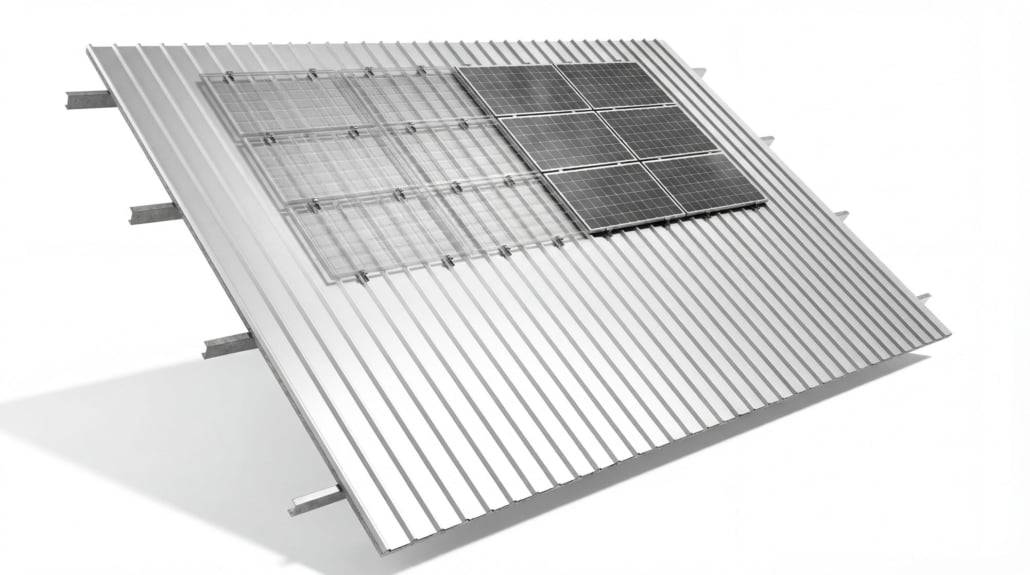
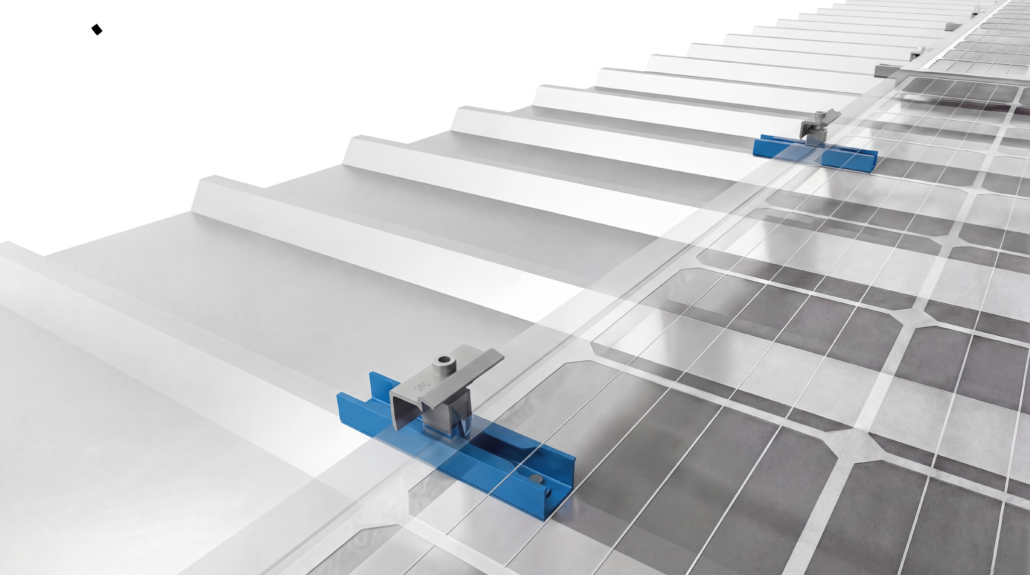
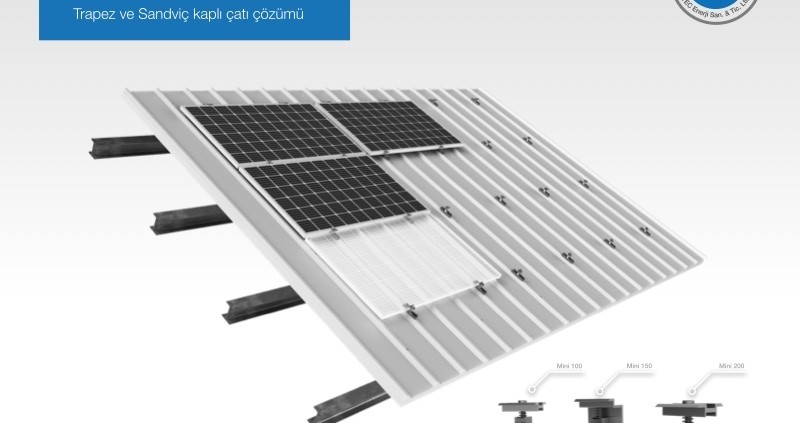
What is ISOTRAP MINI V3?
ISOTRAP MINI V3 is a compact mounting system designed for horizontal solar panel installation on trapezoidal and sandwich-clad industrial roofs.
Rails and clamps, manufactured from aluminum 6063-T66 alloy, are calculated according to EUROCODE standards. Corrosion-resistant stainless steel A2-70 fasteners and bimetal screws ensure a long-lasting assembly.
Thanks to pre-bonded EPDM sealing tapes, the system prevents water leakage on the roof surface, and with pre-assembled EasyClamp clamps it offers 25% faster installation than conventional systems. At only 0.45 kg per square meter, it places minimal load on the roof.
ISOTRAP MINI V3 — How Does It Work in the Field?
Click the icon on the video for full screen.
Technical Data
| Area of Use | Trapezoidal and sandwich-type roofs |
| Panel Size (L) | 1,500 mm - 2,384 mm |
| Panel Size (W) | 990 mm - 1,330 mm |
| Panel Size (H) | 30 mm - 45 mm |
| Fixing | Sealed pointed screw / Rivet |
| Profile / Clamp | Aluminum 6063-T66 |
| Gasket | EPDM |
| Fasteners | Stainless Steel A2-70 & Bimetal |
| Rib Spacing | Max. 285 mm |
| Layout | Horizontal |
System Components
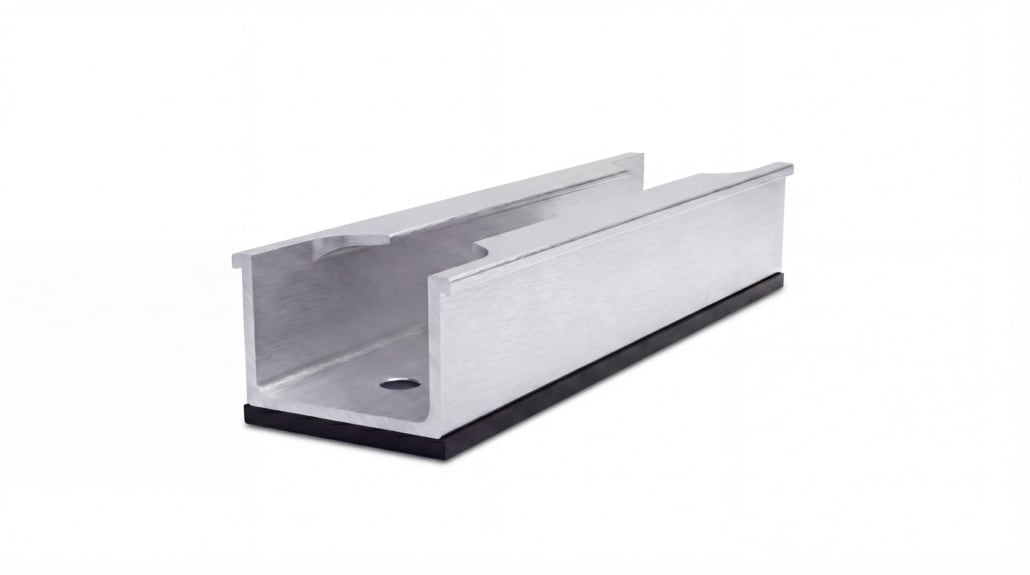
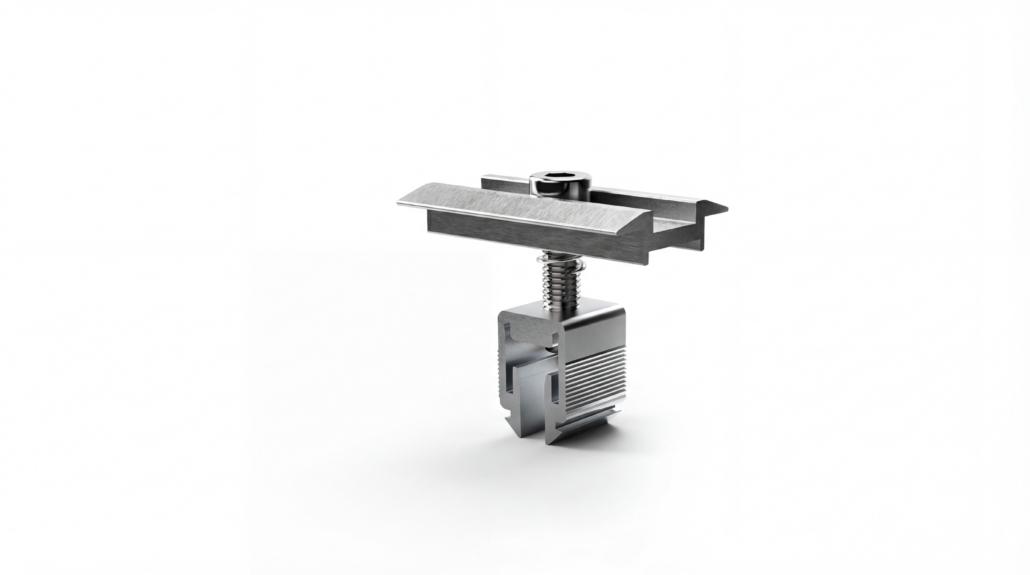
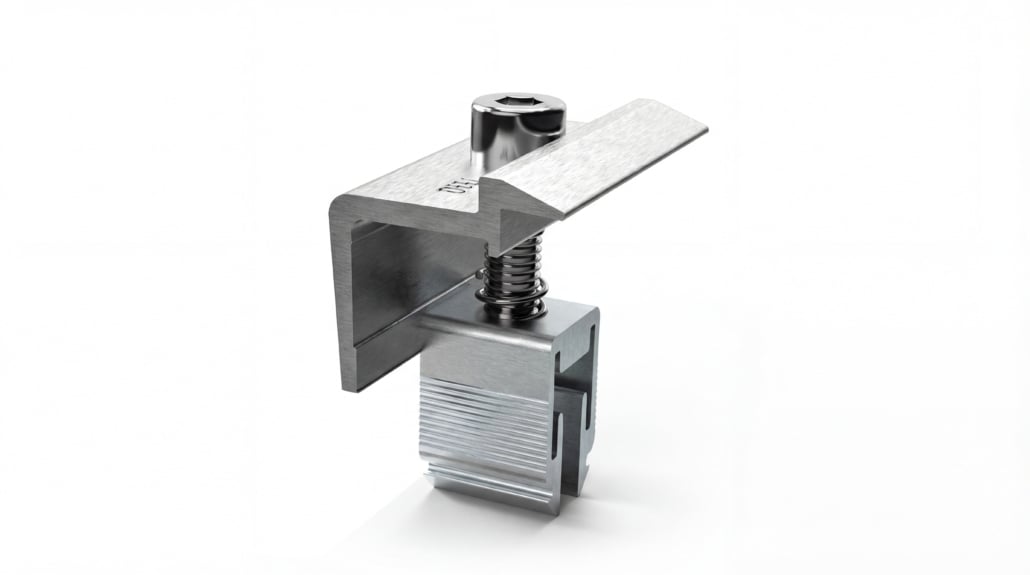
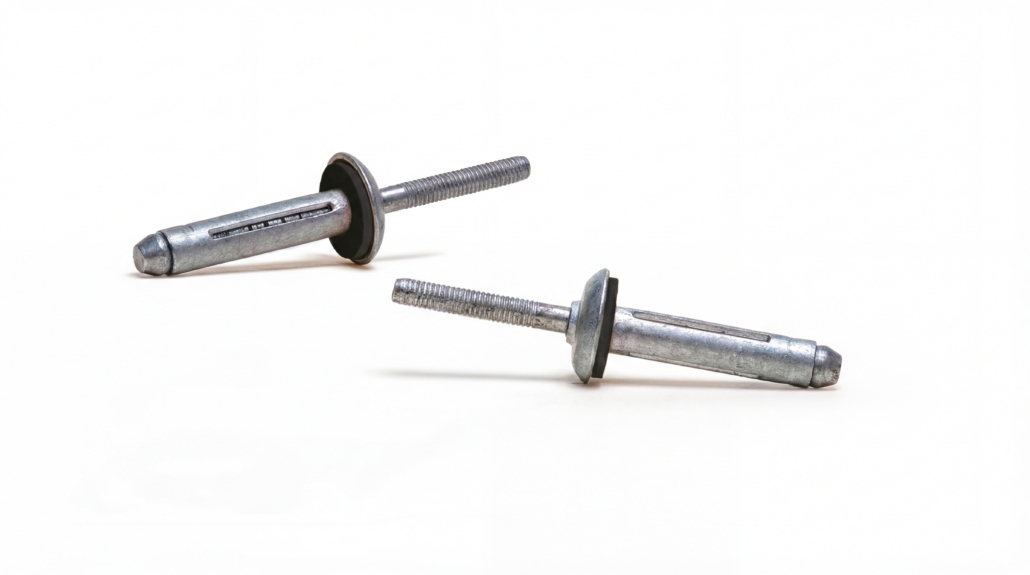
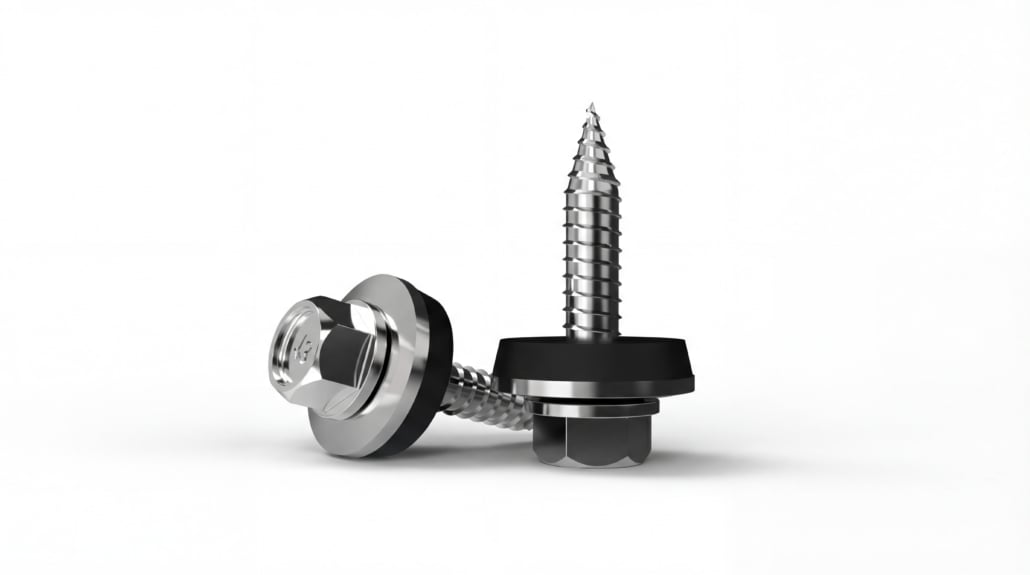
Main mounting profile (AL 6063-T66)
Inter-panel fixing clamp
Outer edge fixing clamp
Fixing to the roof surface
Alternative fastening element
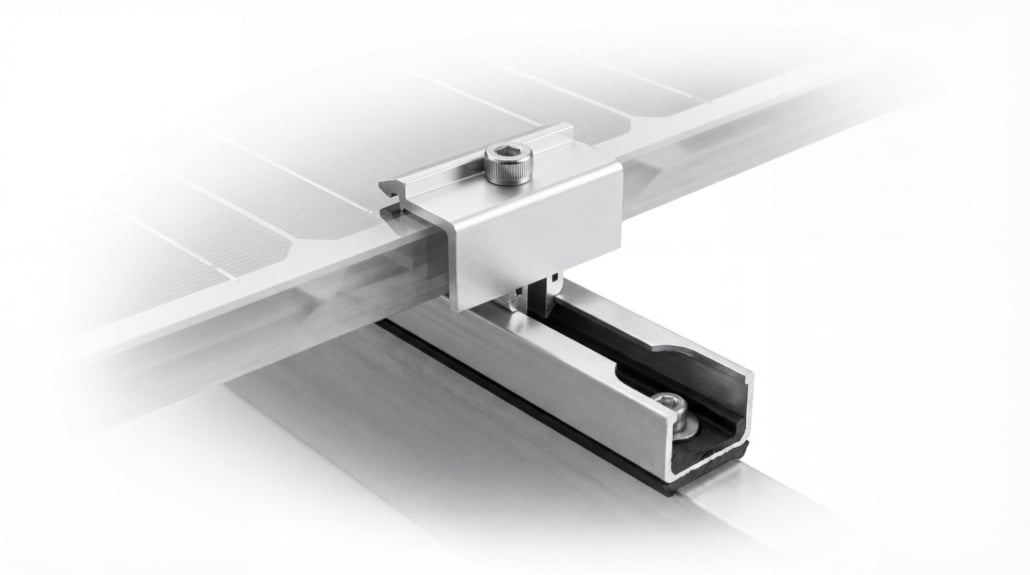
Easy Assembly
-
1Secure the Rails Secure the ISOTRAP Mini V3 rails to the ribs of the trapezoidal roof using sealed pointed screws.
-
2Install the Panels Place the solar panels horizontally on the rails. Ensure that the panel edges fit into the clamp slots.
-
3Lock with Clamps Secure the panels with EasyClamp Middle and End clamps. Apply a tightening torque of 5-25 Nm using a torque wrench.
Technical Documents
Download all technical documentation for the product.
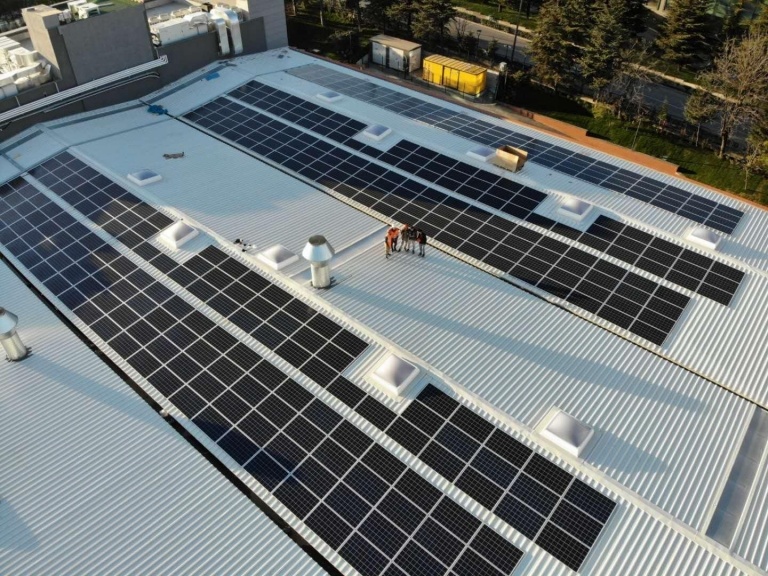
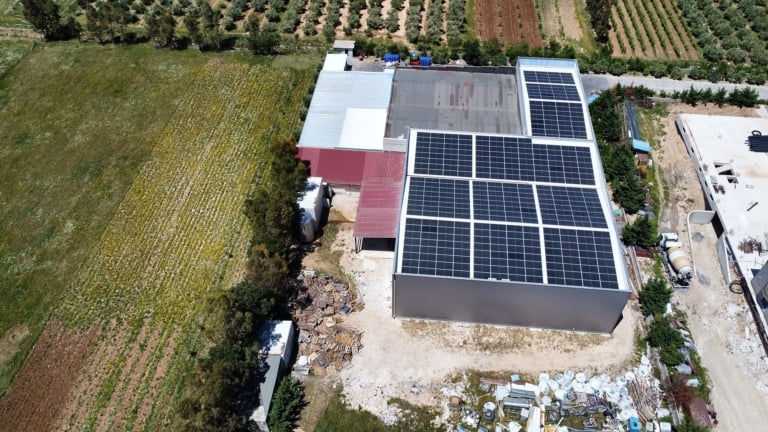
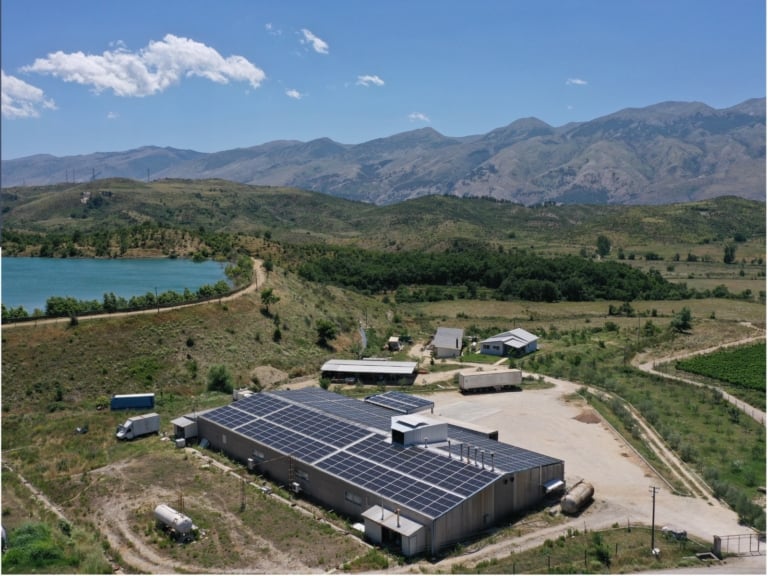
Rooftop PV projects built with ISOTRAP MINI
Frequently asked questions
Which roofs is ISOTRAP MINI V3 used on?
It is used on roofs clad with trapezoidal sheet or sandwich panels. The rib spacing must be 285 mm at most; the rails are fixed to the ribs with sealed self-drilling screws or waterproof rivets.
Can the modules be installed portrait or landscape?
ISOTRAP MINI V3 is designed for landscape layouts. It is used with framed modules 1,500–2,384 mm long, 990–1,330 mm wide and 30–45 mm thick. If you need portrait layouts, ISOTRAP XLA or ISOSIDE, which support both orientations, are worth a look.
How much load does it add to the roof, and what is the warranty?
The system weighs about 0.45 kg/m², so it adds minimal load to the roof. It carries a 12-year warranty.
What is ISOTRAP MINI V3 made of, and does it keep the roof watertight?
Rails and clamps are aluminium 6063-T66, fasteners are stainless steel A2-70 and bimetal, and calculations follow EUROCODE standards. The pre-bonded EPDM tape under the rails, together with sealed screws or rivets, prevents water leaks on the roof surface.
How is ISOTRAP MINI V3 installed?
The rails are first placed on the ribs and fixed, then the modules are set on the rails in landscape and locked with EasyClamp Middle and End clamps. The pre-assembled EasyClamp clamps speed up module installation.
Would you like to receive more detailed information about this system?
BF Attachment · Bifacial Shading Advantage
There are 2 different approaches in the industry. Why is ISOTEC's BF attachment both economical and high-performing?
Why is shading important in bifacial panels?
Bifacial (double-sided) solar panels generate electricity from both their front and back surfaces. The back surface captures radiation reflected from the ground and coming from the side edges — typically 15-20% additional output provides.
The critical point: Any part (purlin, beam, cable) that blocks light falling on the back surface of the panel → on the back surface shadow lines creates, and the cells under the shadow lose output. The purlin-to-panel distance and the purlin's cross-sectional area are the determining parameters.
Therefore, to get the most out of a bifacial investment, the design of the mounting system is critical.
Two Design Philosophies in the Industry
There are two main approaches in the industry to reduce bifacial shadowing:
Inclined C-Beam Competitors
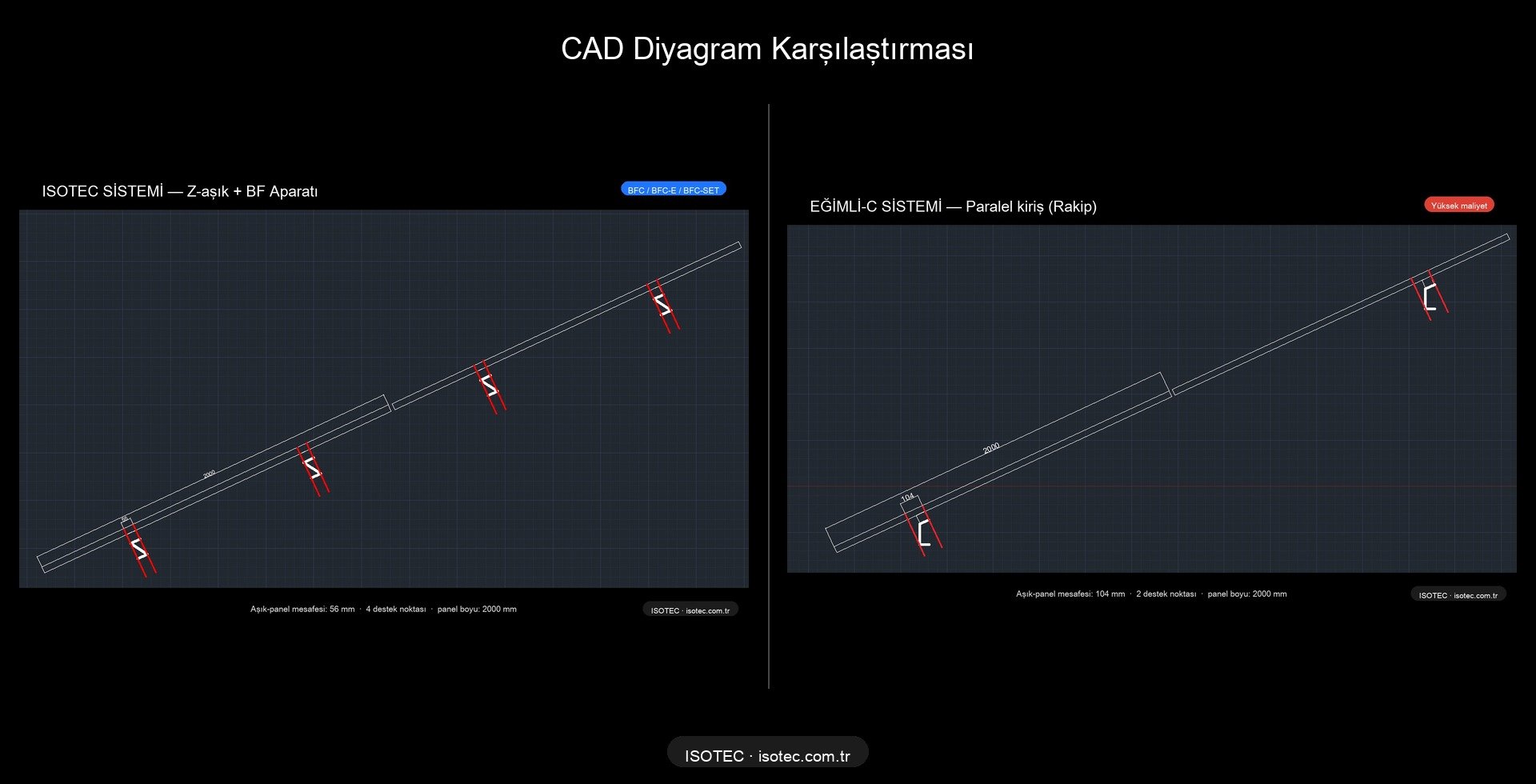
The beam runs parallel to the panel at the same angle. A single long C-profile provides grip along the panel.
- ✓ Minimal shade, high bifacial yield.
- ✗ Long steel beams, high material costs.
- ✗ In sloping structures, column heights vary.
- ✗ Tolerances are difficult, installation takes a long time
Vertical Beam + Horizontal Z-Purlin ISOTEC + BF
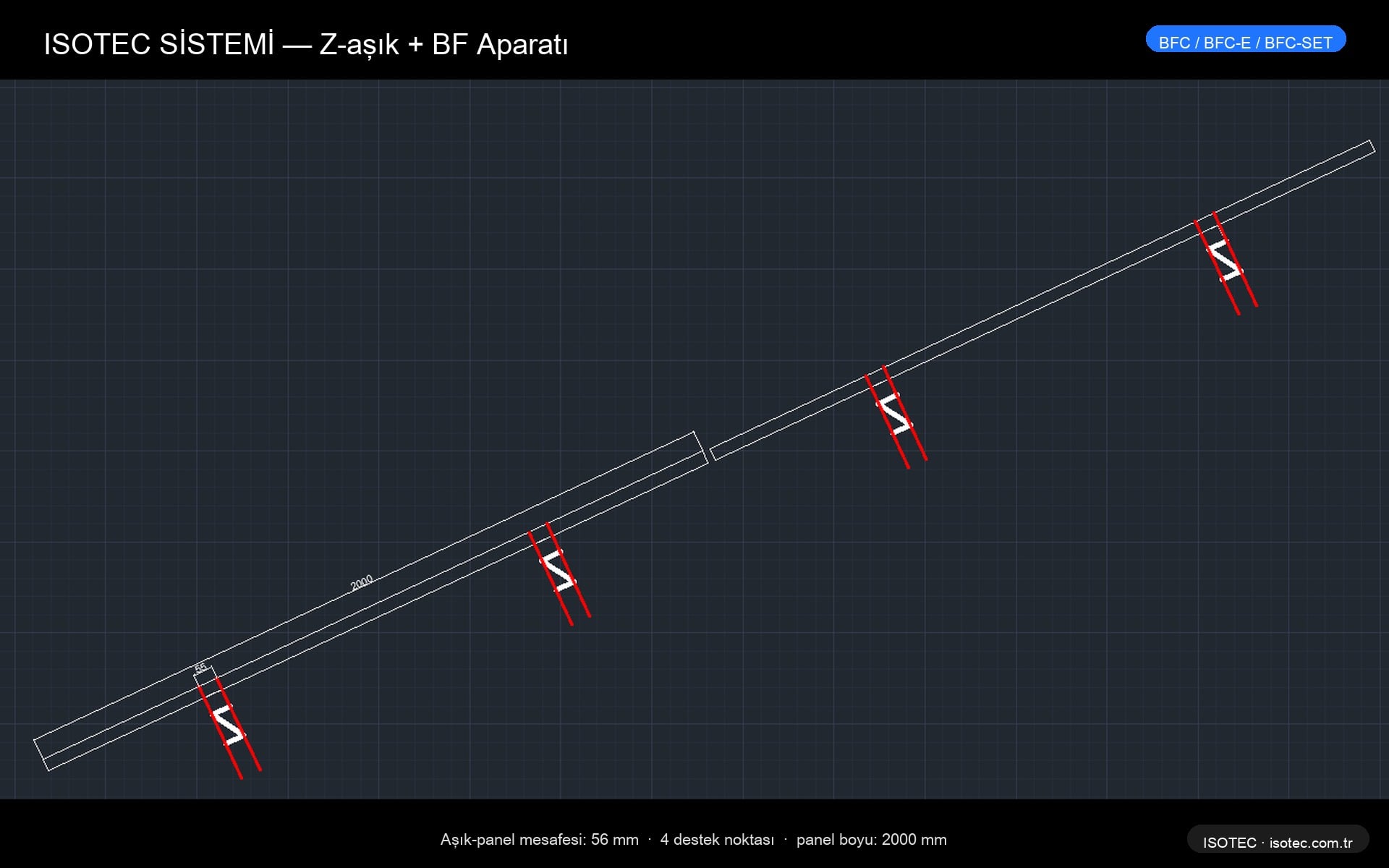
The beams are vertical (perpendicular to the ground, short). The Z-profile purlins extend horizontally. A BF 56 mm spacer is inserted between the purlin and the panel.
- ✓ Low steel content, quick assembly, economical.
- ✓ Bifacial yield with BF adapter vs. Inclined-C equal
- ✓ Standard column, easy supply.
- ✓ Slot design compatible with thermal expansion.
CAD comparison — purlin-panel distances
How does the BF adapter work?
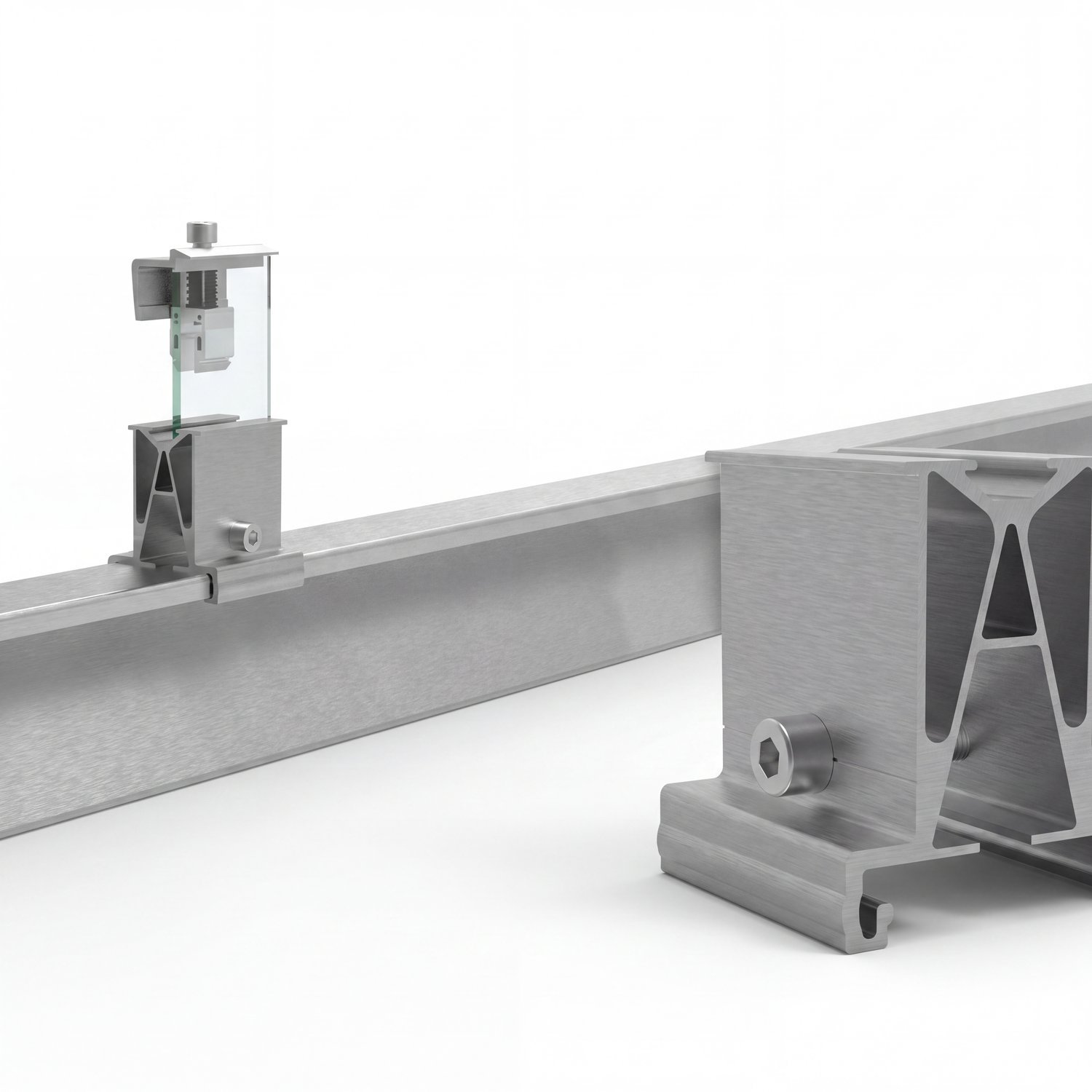
The ISOTEC BF adapter is placed between the Z-purlin and the underside of the panel as a spacer + clamp system. By creating a 56 mm gap, it maximizes the irradiance reaching the back surface of the panel.
Design features
- Spacer body: EN AW-6005A T6 anodized aluminum (3.0 mm wall)
- Distance: The distance between the purlin's top surface and the panel's bottom surface is 56 mm.
- Slot design: Panel thermal expansion accommodated (±2 mm tolerance)
- Screw: Stainless steel A2 M8×40 hexagonal
Clamp variations
| Code | Type | Usage |
|---|---|---|
| BFC | Glass-to-glass edge | For frameless glass-to-glass panels at panel edges. |
| BFC-E | Center grip | Center panel, shared grip, frameless. |
| BFC-SET | Complete set | All components are pre-packaged, quick assembly. |
CAD details — ISOTEC system
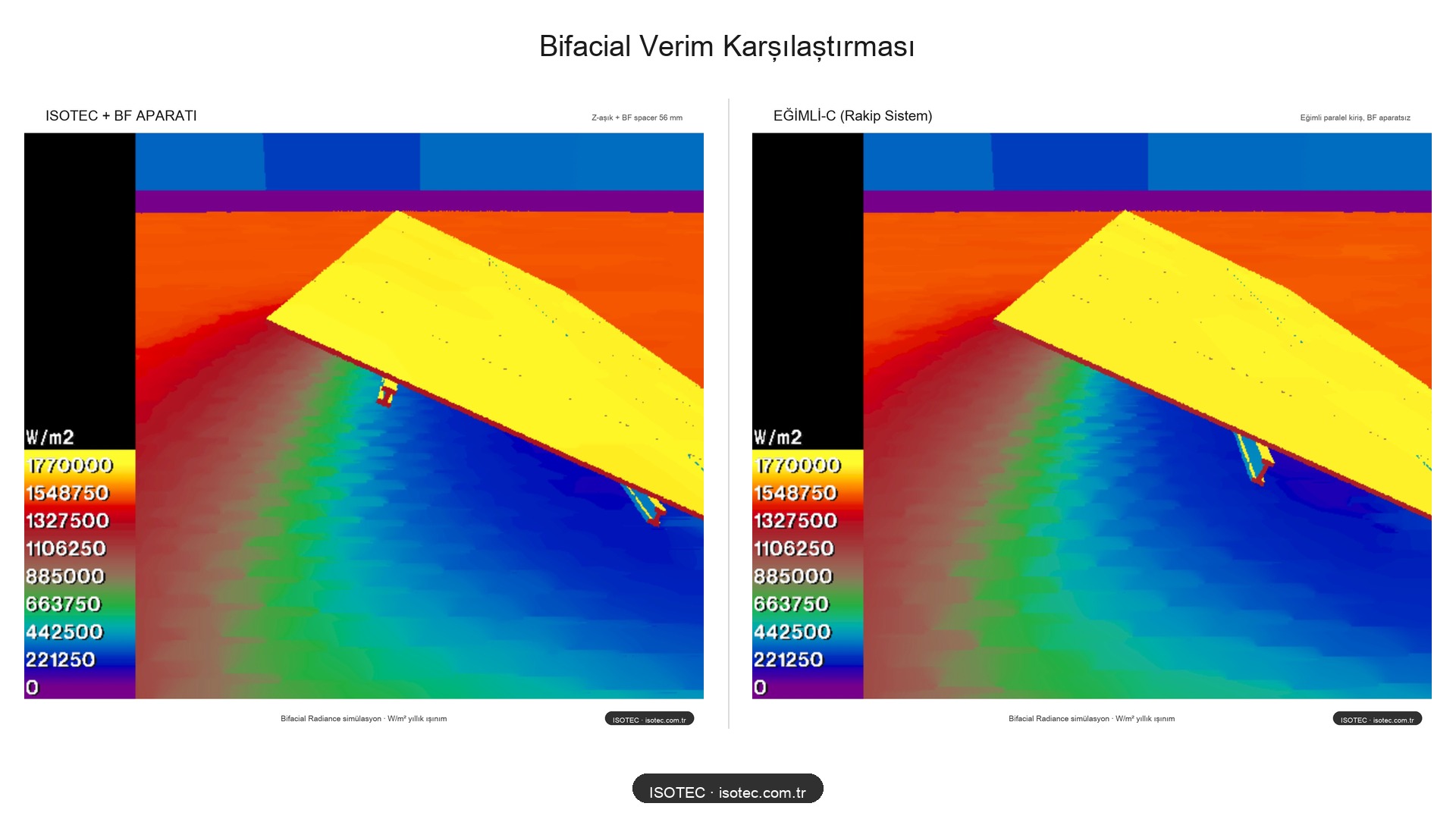
Bifacial Radiance Simulation Results
Results were obtained using NREL's (US National Renewable Energy Laboratory) open-source Bifacial Radiance Python library. A scan-based irradiance calculation that accurately reflects field conditions is performed.
Heat map comparison
Warm (yellow) colors indicate high irradiation (1.77 MWh/m² annually), while cool (blue) colors indicate shaded areas. In both systems, the front surface of the panel (the upper yellow area) receives homogeneous irradiation; the difference appears on the panel's rear surface .
Numerical results
| System | Bifacial Gain | Shadow Line | Cost |
|---|---|---|---|
| Inclined-C (Competitor) | ~%18-20 | 1 big | 💰💰💰 High |
| ISOTEC + BF Adapter | %18 | 2 small | 💰 Economical |
| ISOTEC (without BF adapter) | ~%10-12 | 2 nearby shadows | 💰 Lowest |
The same bifacial production, shorter beam, less steel, faster assembly. The cost difference is significant at the field scale.