Start typing to search. ↑↓ to navigate, Enter to select, Esc to close.
No results. Try a different word.
ZM Coated Steel Technology
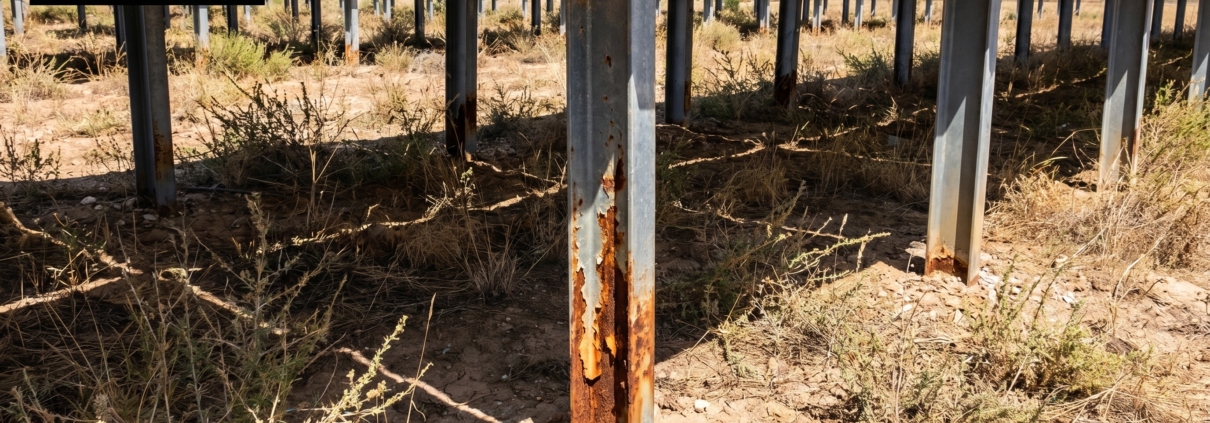
Solar farms last 25 years — and so should the steel beneath them. ZM coated steel (Zn-Al-Mg) self-repairs at the cut edge; providing 2× longer durability at half the thickness compared to HDG. Supply from 4 manufacturers: Magnelis®, PosMAC®, Shougang and HBIS — EN 10346 and ISO 8353:2024 certified, each batch verified by bath analysis.
Summary
Why ZM?
-
50µm Thin but strong
ZM620 single-sided coating — half the material of HDG, longer service life.
-
>50years Field life
ZM430 — ArcelorMittal Magnelis® design data, class C2/C3.
-
10× Edge protection
Self-healing at the cut edge — a unique feature that HDG cannot provide.
-
EN 10346 Standard
ZM310 / ZM430 grades + S350GD–S450GD steel. ISO 8353:2024 compliant.
Glossary
ZM, Magnelis®, PosMAC®, Shougang, HBIS, HDG — they are not the same thing.
Terminology is the foundation of purchasing language. Brand, class, family—the key distinctions. ISOTEC verifies all manufacturers, including Magnelis®, PosMAC®, Shougang, and HBIS, through batch-based bath analysis and integrates them into its supply chain.
ZM
Within the scope of EN 10346 general Zn-Al-Mg coating family. Brand-independent technical grade. Al+Mg total %1.5–8, Mg ≥ %0.2. ISOTEC keeps 4 manufacturers from this family in its approved supply line.
Magnelis®
ArcelorMittal's trademark. Bath chemistry Zn-3.5%Al-3%Mg. Brand solution within the ZM class.
PosMAC® 3.0
POSCO's trademark. Bath chemistry Zn-3%Mg-2.5%Al. ISOTEC's current 3.1-certified supply line.
Shougang Zn-Al-Mg
Shougang Group (首钢, China) production line. Bath chemistry Zn-3%Al-3%Mg — Standardized according to ISOTEC specifications. Each batch is verified by EN 10204 Type 3.1 certification and independent testing/analysis laboratory bath chemistry analysis. ISOTEC approved supply line.
HBIS Zn-Al-Mg
HBIS Group (河钢, China — Hansteel / Laoting lines) production line. Bath chemistry Zn-3%Al-3%Mg — Standardized according to ISOTEC specifications. Each batch is verified by EN 10204 Type 3.1 certification and independent testing/analysis laboratory bath chemistry analysis. ISOTEC approved supply line.
HDG
Hot-dip galvanizing (HDG). After fabrication, the part is immersed in the bath; differs from ZM in its different process and strength profile.
Design life
How durable is ZM in C1–C5 corrosion classes?
ISO 9223 classes — field reference for ZM310 and ZM430; not a warranty period.
| Corrosion Class | ZM310 | ZM430 | ZM620* |
|---|---|---|---|
| C1 Indoor / sheltered | >50years | >50years | >50years |
| C2 Rural / low pollutant | >50years | >50years | >50years |
| C3 City / medium pollutant | 30–50years | 40–50years | >50years |
| C4 Industrial / medium salt | 15–30years | 20–40years | 30–50years |
| C5 High salt / aggressive | 8–15years | 10–20years | 15–30years |
Reference frame
Standards & Tests
Three references for procurement: EN 10346, ISO 8353:2024, EN 10204 Type 3.1.
EN 10346
Standard for continuously hot-dip coated flat steel products. ZM classes (ZM310, ZM430, ZM620…), steel grades (S350GD, S420GD, S450GD), and coating mass test methods are defined in this standard.
ISO 8353:2024
International product standard for ZM coated steel, published at the end of 2024. Al–Mg composition range, mass ratios, performance classification — a reference for new projects.
Test Methods
Coating thickness XRF (ISO 3497), base steel chemistry OES (ASTM E415), corrosion ISO 9227 salt spray, coating mass EN 10346 Annex A Stripping test. Document level EN 10204 Type 3.1.
Test / Analysis
Which lab can perform the ZM test?
To independently verify the Al/Mg ratio, coating thickness, and corrosion performance of ZM coatings, you need a test/analysis laboratory operating according to ISO/IEC 17025 compliant methods. See a map of laboratories in 13 countries worldwide that can perform XRF composition analysis, GD-OES depth profiling, salt spray testing, and more.
Verification
Are all the ZM products on the market genuine?
According to EN 10346, the minimum total Al+Mg content of a ZM coating must be 1.5–8% and Mg ≥ 0.2%. Products below these thresholds are not technically classified as ZM and do not have the self-healing property.
Low Al/Mg Ratio
Mg <%0,2 → no self-healing. Al <%1,5 → ZM microstructure does not form. Risk of corrosion at cut edges.
Insufficient Coating Thickness
The label is ZM310, but the actual thickness is 15–18 µm (it should be 24 µm). Design life tables become invalid.
Missing 3.1 Certificate
The quality name, coating class, mechanical test results, or coating mass value is missing — the document is invalid.
ZM620 Misconception
ZM620 is not included in the EN 10346:2015 standard table. The document labeled "EN 10346 ZM620" is technically incorrect.
Original brand vs. generic — can you see the difference?
Original brands deliver a consistent composition; with ISOTEC-spec supply, batch-by-batch control ensures this consistency; generics fall within a wide range. Self-healing requires Mg ≥ 2%.
| Coating | Al | Mg | Self-healing |
|---|---|---|---|
| Original brands — consistent composition | |||
| PosMAC® 3.0 (POSCO) | %2,5 | %3,0 | Optimal ✓ |
| Magnelis® (ArcelorMittal) | %3,5 | %3,0 | Optimal ✓ |
| ZM EcoProtect® (thyssenkrupp) | ≥%1 | ≥%1 | Yes ✓ |
| ISOTEC-spec supply — batch-by-batch verification | |||
| Shougang Zn-Al-Mg (China) | %3,0 | %3,0 | Optimal ✓ |
| HBIS Zn-Al-Mg (China) | %3,0 | %3,0 | Optimal ✓ |
| Generic products — a wide range | |||
| Low Mg generic | %1–4 | %0,2–0,5 | No ✗ |
| Medium Mg generic | %1–3 | %0.5–1.5 | Weak ~ |
Mg <%0.5 → self-healing is practically zero. Mg ~%1.5 → weak/delayed. Mg ≥%3 → optimal (Magnelis/PosMAC target point).
How do you verify it?
The quality name (S350GD), coating class (ZM430), mechanical properties (Rp0.2/Rm/A80), and coating mass — all four fields must be complete.
Zn/Al/Mg measurement at a minimum of 3 points per ISO 3497. Verify Al ≥ 1.5% and Mg ≥ 1.0%.
The heat number on the 3.1 certificate must match the delivery note and the physical product label exactly.
EN 10346 Annex A verification by stripping method. ZM430 → total of two surfaces ≥430 g/m², single surface ≥150 g/m².
Comparison
HDG vs ZM — which suits which project?
Same zinc family, different processes. In cutting/drilling intensive applications like GES, the edge behavior of ZM makes a critical difference.
Process
HDG: Post-production part dipping (batch). ZM: continuous coating (coil) during production.
Cut edge
HDG: Unprotected, requires additional repairs. ZM: by Mg ions passivating at the edge self-repair.
Typical lifespan (C3)
HDG 80: 20–30 years. ZM430: 40–50 years (Magnelis design data).
Thin sections
HDG: post-process dipping is limited. ZM: Since it is applied during the coil stage, it is suitable for thin profiles.
Cost logic
HDG: low upfront cost per m². ZM: higher upfront coating cost, but no edge repair or renewal → total cost of ownership can be lower over 25 years.
When to use ZM?
Laser/plasma/shear-cut thin profile, solar panel carrier, coastal (C4/C5) applications, construction where a long life cycle is desired.
Same lifespan, less material.
Target of 25-year service life in a C4 environment: per ISO 1461, HDG requires 4 mm steel + 70 µm coating, whereas ZM430 needs only 3 mm steel + 35 µm.
| Criterion | HDG (ISO 1461) | ZM310 / ZM430 |
|---|---|---|
| C3 — Urban / moderate pollutant environment | ||
| Steel thickness | 3 mm (55 µm HDG) | 2.5–3 mm (ZM310 is sufficient) |
| Coating weight | ~550 g/m² | 310 g/m² |
| Expected lifespan | 25–35 years | 30–50 years |
| C4 — Industrial / medium salt environment | ||
| Steel thickness | 4 mm (70 µm HDG) | 3 mm (ZM430 is sufficient) |
| Coating weight | ~600 g/m² | 430 g/m² |
| Expected lifespan | ~23 years | 20–40 years |
| Cut edge protection | Unprotected | Self-healing (Mg ions) |
| Weight saving (C4, 50×30 profile) | ~10.2 kg/m | ~7.6 kg/m (25% lighter) |
Source: ISO 1461:2022, SCI 2024 independent review, ArcelorMittal Magnelis® technical publication.
Regardless of soil class, mandatory ZM coating requirements per EN 10346 for the support steel of solar power plants. Each item is tied to a standard, test method or certificate requirement.
ZM Coated Steel Support System — Technical Specifications
1. Reference Standards. Load-bearing steel profiles and fasteners are manufactured and delivered in accordance with the following standards: TS EN 10346:2015 (continuously hot-dip coated steel flat products — technical delivery conditions; ZM descriptive envelope), ISO 8353:2024 (Zn-Al-Mg coated steel sheet — first edition, December 2024; product specification), EN 1090-2 (steel structures — application class at least EXC2), EN 10204 (types of inspection certificates), ISO 9223:2012 (atmospheric corrosion categories C1–CX), ISO 9224:2012 (long-term corrosion prediction methods), ISO 12944-2:2017 (environmental classification for paint/duplex systems), EN ISO 6892-1 (metal materials — tensile test).
2. Base Steel. The base steel grade shall be S350GD (minimum yield strength Rp0.2 ≥ 350 MPa, EN 10346 Table 7) or higher. Tensile properties are verified according to EN ISO 6892-1; the results are recorded as actual measurement values in the inspection certificate.
3. Coating Class. The coating shall be Zn-Al-Mg (ZM) of minimum class ZM310 according to TS EN 10346. The total coating mass on both surfaces is verified as triple-point average ≥ 310 g/m², single-point minimum ≥ 265 g/m² (EN 10346 Table 4). Reference measurement method is ISO 1460 (gravimetric); non-destructive alternative is ISO 3497 (XRF) or ISO 2178 (magnetic). Equivalent coating thickness is approximately 24 µm/surface (ZM430: 35 µm/surface).
4. Environment Category and Contractual Guarantee Basis. The atmospheric corrosion category of the project site is determined according to ISO 9223 and ISO 12944-2. The table below defines, by coating class, the contractual guarantee minimum (procurement specification base). These values are conservatively derived from the ArcelorMittal Magnelis® commercial warranty ceiling (up to 25 years in certain applications) and EN 10346 coating mass-thickness data. The expected field performance (design life) generally exceeds this base by 1.5–2x. — For field performance information, please refer to the "How long does ZM last in C1–C5 corrosion classes?" table above.
| Environment (ISO 9223) | Zn rate band (µm/year) | Minimum coating | Contractual guarantee basis* |
|---|---|---|---|
| C1 — very low (indoor, protected) | ≤ 0.1 | ZM310 | ≥ 50 years |
| C2 — low (rural, low pollution) | ≤ 0.7 | ZM310 | ≥ 50 years |
| C3 — medium (urban/rural industrial) | ≤ 2.1 | ZM310 | ≥ 25 years |
| C4 — high (heavily industrial/salty inland region) | ≤ 4.2 | ZM430 | ≥ 20 years |
| C5 — very high (coastal / heavily industrial) | ≤ 8.4 | ZM430 + duplex (ZM + ISO 12944-5 compliant paint system) | ≥ 20 years |
* The contractual guarantee basis is the minimum period the supplier commits to in writing until the first red rust penetration. Design life ≠ warranty period. Field performance varies depending on microclimate, installation design (drainage, electrolytic insulation), maintenance regime, and secondary interventions. ISO 9223 Im1/Im2/Im3 categories (pure water, seawater, continuous contact with soil) are outside the scope of pure ZM; duplex systems or special engineering assessments are mandatory for these applications.
5. Coating Composition. Bath chemistry: total Al + Mg 1.5–8% by weight, Mg ≥ 0.2%, remainder Zn (EN 10346 ZM definition range). The ISOTEC primary supply range is narrower than this general definition: Al 2.5–3.5% and Mg 2.5–3.5% (the common optimum of Magnelis®, PosMAC®, Shougang and HBIS). Composition is verified by ISO 3497 XRF or destructive ICP-OES and recorded on the inspection certificate as the heat (cast) analysis.
6. Inspection Certificate. An EN 10204 Type 3.1 inspection certificate will be provided for each batch. The certificate will be signed by an authorized inspection representative independent of the production department and will contain at least the following information: (i) material quality name (e.g., S350GD+ZM310), (ii) heat/cast number (matching the stamp on the material), (iii) chemical composition (casting analysis), (iv) mechanical test results (Rp0.2, Rm, A80), (v) coating mass measurement value (triple-point and single-point), (vi) order reference and TS EN 10346 declaration of conformity. Type 2.1 and 2.2 certificates are not accepted — the traceability chain is broken.
7. Incoming Quality Control. The buyer reserves the right to perform (a) certificate ↔ material heat no match, (b) visual surface inspection (cracks, abrasions, coating peeling), (c) ISO 3497 XRF thickness measurement (minimum 3 points/surface per lot) for each batch. Batches found to be non-conforming will be subjected to arbitration testing using the EN 10346 Annex A gravimetric method.
8. Supplier Guarantee. The supplier shall declare in writing the red rust penetration warranty for the delivered coated product, appropriate to the applied coating class and project environment category. The declared period cannot be less than the minimum values in the table in Clause 4. The warranty certificate shall clearly define: (i) the environment category (ISO 9223), (ii) the coating class (EN 10346), (iii) the applied product code, and (iv) the exclusions from the warranty — unauthorized cutting/drilling/welding/grinding on site, improper transport or storage, chemical contact, continuous contact with water/soil, breach of maintenance. In a C5 environment, the warranty depends on the duplex system application; pure ZM430 coating alone is not covered under the C5 warranty.
9. Rejection Criteria. The following situations are grounds for batch rejection: (a) Heat/cast number does not match the material stamp on the certificate, (b) Triple-point coating mass measurement < 310 g/m² or single-point < 265 g/m², (c) Al+Mg total < %1.5 or Mg < %0.2, (d) EN 10204 Type 3.1 inspection certificate is missing or signed by the production department, (e) Mechanical test values Rp0.2 < 350 MPa, (f) Supplier warranty statement is missing or below the minimum periods specified in Article 4 table. Conditional acceptance (with additional evidence): Manufacturer grades not included in the EN 10346:2015 normative table (e.g., "ZM620") are accepted only with the manufacturer's EN 10204 Type 3.1 certificate and an independent testing/analysis laboratory report; if this evidence is not provided, they are rejected. A ZM310 proposal for C4 environments is evaluated only with project-specific corrosion analysis (micro-climate measurement, field exposure report); the corporate base coating is ZM430. Proposals from manufacturers without a registered trademark (Shougang, HBIS, etc.) are accepted only if, for each batch, the manufacturer's EN 10204 Type 3.1 certificate, an independent testing/analysis laboratory bath chemistry analysis (Al, Mg, Zn) and an EN 10346 Annex A gravimetric coating mass report are submitted together.
10. Dispute Resolution. In case of measurement discrepancies, gravimetric testing according to EN 10346 Annex A is performed by an independent testing/analysis laboratory (using the appropriate method according to ISO/IEC 17025). The test cost is borne by the supplier if a discrepancy is found.
Acceptance — measurable evidence
- TS EN 10346 minimum ZM310 (triple-point ≥ 310 g/m², single-point ≥ 265 g/m²)
- Base steel S350GD (Rp0.2 ≥ 350 MPa, EN ISO 6892-1)
- Composition Al+Mg 1.5–8%, Mg ≥ 0.2% (ISO 3497 XRF / ICP-OES)
- EN 10204 Type 3.1 certificate — independent signature + heat no match
- ISO 1460 gravimetric measurement arbitration method
Reject — direct return
- Heat/cast no certificate ↔ material stamp mismatch
- Measured mass < 310 g/m² (triple-point) or < 265 g/m² (single-point)
- Mg < %0,2 or Al+Mg < %1,5 — ZM outside the definition envelope
- EN 10204 Type 2.1/2.2 certificate — traceability broken.
- Non-standard class (e.g., ZM620) — quote without additional evidence
Only the main specification text is copied; the acceptance/rejection cards are summaries. For full review, “Enlarge” → Download PDF.
Technical library
Brochure, specifications, 5 technical reports
Download in your language. Turkish is available; English and German will be activated automatically once the translations are complete.
Report 1 — ZM General Review
General technical review of ZM coating and Magnelis technology within the EN 10346 framework.
Report 2 — Specification & Test Control
Procurement specification, incoming quality control plan, test methods.
Report 3 — C1–C5 Corrosion Resistance
Design life tables, warranty interpretation, field practice recommendations.
Frequently Asked Questions