Posts

Bifacial Solar Panels: Double-Sided Energy Production HOW DOES IT WORK?
WHAT ARE BIFACIAL SOLAR PANELS?

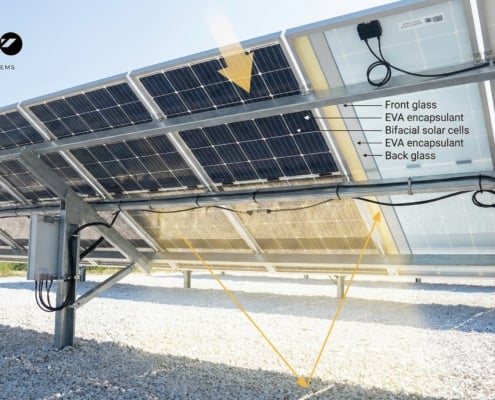
BIFACIAL SOLAR PANELS, as the name suggests, are solar panels that produce energy by receiving light from both their front and back surfaces. While traditional solar panels only produce energy from their front surfaces, the back surface of bifacial panels can also absorb sunlight. This feature increases the efficiency of the panels because the reflected light bounces off surrounding surfaces (such as snow, water, grass) and hits the back surface, contributing to extra energy production.

WORKING PRINCIPLE OF BIFACIAL SOLAR PANELS

BIFACIAL SOLAR PANELSThe working principle of is a bit different from traditional solar panels. Here is how they work step by step:

  1. LIGHT ABSORPTION (FRONT SURFACE): The front surface of bifacial panels absorbs sunlight and generates electricity. This allows photovoltaic cells to respond to sunlight and generate electricity, just like in traditional panels.

  2. REFLECTION FROM THE BACK SURFACE: Sunlight reflected from surrounding surfaces hits the back surface of the panels. Shiny surfaces in particular (such as white snow, water, sand) reflect sunlight strongly, and this light is absorbed by the photovoltaic cells on the back surface.

  3. DOUBLE-SURFACED ELECTRICITY PRODUCTION: Because energy is generated from both the front and back surfaces, bifacial panels are exposed to more sunlight and produce more electricity, increasing their efficiency.

ADVANTAGES OF BIFACIAL PANELS

BIFACIAL SOLAR PANELSoffers many advantages over traditional panels. Here are some of the key benefits:

1. HIGH EFFICIENCY

Bifacial panels are exposed to more sunlight thanks to their double-sided energy production. This allows for more electricity to be produced. Especially with the effect of reflected light, efficiency can be increased. The extra energy from the back surface is usually more than the energy obtained from the front surface. %10-30 may be up to.

2. LESS SPACE USAGE

BIFACIAL PANELS, because it is more efficient, more energy can be produced in the same area. This feature is a great advantage especially for those who want to produce solar energy in limited areas. It is possible to use fewer panels to produce more energy.

3. LONG LIFE AND DURABILITY

BIFACIAL PANELSThe back surface of the is exposed to external factors like the front surface. However, most of the panels have an aluminum frame, which makes them long-lasting and durable. In addition, the reflected light keeps the surface temperatures of the panels under control, preventing overheating and increasing their efficiency.

4. ENVIRONMENTALLY FRIENDLY AND SUSTAINABLE

BIFACIAL PANELS, can reduce environmental impact by producing more energy. Thanks to their high efficiency, more energy is produced with fewer panels, which means less resource consumption. It also makes more use of natural energy sources by using the light reflected by surrounding surfaces.

5. ENHANCED PERFORMANCE SHADING EFFECT

BIFACIAL PANELSThe fact that the back surface of the is also exposed to sunlight reduces the shading effects of the panels. In other words, even if shadows from surrounding objects fall on the front surface of the panels, energy production from the back surface continues. This increases efficiency.

USAGE AREAS OF BIFACIAL SOLAR PANELS

BIFACIAL PANELS, gives more efficient results especially in open areas and large areas. They are frequently used in the following areas:

  • AGRICULTURAL AREAS AND FARMS: In areas with extensive land use, bifacial panels can be ideal for high efficiency. On farms, panels provide extra energy production using ground reflection.

  • ROOF APPLICATIONS: BIFACIAL PANELS, when installed on the roof, can produce more energy thanks to the reflection from surrounding surfaces.

  • SHADING SYSTEMS: BIFACIAL PANELS, can also be used in shading areas. Especially in large commercial projects, the back surface of the panels provides additional energy production.

  • FLOATING SOLAR ENERGY SYSTEMS: Bifacial systems combined with floating solar panels provide extra efficiency by using light reflected from the water surface.

THE FUTURE OF BIFACIAL PANELS

BIFACIAL SOLAR PANELS, is one of the most exciting developments in solar technology. Bifacial energy generation increases the efficiency of solar energy by producing more electricity and using less space. The use of these panels has great potential to provide more sustainable and economical solutions in the energy sector. With the developing technology, bifacial panels are expected to become more widespread and find wider applications.

If SOLAR ENERGY SYSTEMIf you want to optimize your energy consumption and produce more energy, bifacial panels may be the right choice to brighten your future!

NANO-TEKNOLOJİ VE GÜNEŞ PANELLERİ: VERİMLİLİĞİ %50 ARTIRAN ÇÖZÜMLER
1. WHAT IS NANO-TECHNOLOGY AND HOW DOES IT AFFECT SOLAR PANELS?

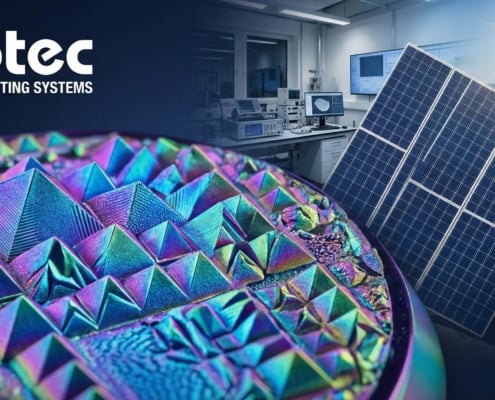
NANO-TECHNOLOGY, refers to scientific and engineering studies carried out on a very small scale (nanometer dimensions). This technology, PROPERTIES OF MATERIALS It is used to make it more efficient and to provide new functions. Nanotechnology in solar panels, optimizing panel surfaces, INCREASING ENERGY EFFICIENCY and LONGER LASTING SYSTEMS plays an important role in the creation of.

a. USE OF NANO-MATERIAL

Nanotechnology, THINNER AND MORE DURABLE MATERIALS This ensures the production of solar panelsenables more efficient operation. Nanoscale materials, can absorb sunlight better and IT CAN BE CONVERTED INTO ENERGY WITH HIGHER EFFICIENCY.

b. INCREASING LIGHT COLLECTING CAPACITY

Nano-technological materials, Capture sunlight more effectively has the ability. NANOWELS, NANO-PURIFIED METALS and SPECIAL NANO-FILMS, integrated into the surface of solar panels absorb more sunlight allows it to do so.

2. INCREASED EFFICIENCY IN SOLAR PANELS WITH NANO-TECHNOLOGY

Nanotechnology integration with solar panels, the efficiency of the panels %50 oranında artırma Here are some of the important advantages offered by nanotechnology:

a. MORE ENERGY PRODUCTION

Nanotechnology, solar panels absorb more light enables solar energy to be converted into electrical energy more efficiently. Nanomaterial coatings, the light of the panels in a wider spectrumhelps absorb, which increases energy production capacity.

b. MORE DURABLE PANELS

Nanotechnology, extends the life of solar panels. NANO-COATINGS, the surface of solar panels PROTECTS FROM DIRT AND DUST, thus ensuring that the panels operate at high efficiency for a longer period of time. In addition, nano-surface coatings, solar panels require less maintenance provides.

c. LOW WEIGHT AND HIGH EFFICIENCY

Panels using nanotechnology, lighter and more compact This means that the panels can take up less space and provide more solar energy generation means.

3. CONTRIBUTIONS OF NANO-TECHNOLOGY TO SOLAR ENERGY SYSTEMS

Nanotechnology not only increases the efficiency of solar panels but also improves the performance of solar energy systems. OVERALL PERFORMANCE Some of the contributions of this technology are:

a. CHEAPER PRODUCTION COSTS

Nanotechnology, solar panel production costs Since nanomaterials can be produced with less energy and less raw materials, Making solar panel production more economical This also provides, solar energy systems at lower costs makes it possible to establish.

b. HIGH PERFORMANCE SOLAR CELLS

Nanotechnology use, more high efficiency solar cells Thanks to nanostructures, more efficient transport of electrons is provided, which means that the solar cell to produce more energy provides opportunities.

c. FLEXIBLE AND LIGHTWEIGHT DESIGNS

Nanotechnology, flexible solar panels paves the way for production. Flexible panels, in a wider area available and innovative applications becomes suitable for. For example, ON THE ROOFS OF BUILDINGS, TO THE SUN ROOF OF CARS or TO PORTABLE DEVICES can be placed.

4. NANO-TECHNOLOGY AND SOLAR PANELS OF THE FUTURE

Integrating nanotechnology into the solar energy sector, future solar energy production will make it more efficient and accessible. developments, solar energy Wider audiences It will encourage the use of. In addition, panels developed with nanotechnology, at lower costs and with higher efficiency can produce energy.

a. FUTURE INVESTMENTS

Nanotechnology is an important resource for companies investing in the solar energy sector. potential growth areas This technology offers while increasing the efficiency of solar panels, innovative products and smart systems also enables development.

b. SUSTAINABLE ENERGY FUTURE

Nanotechnology and solar panels combination, sustainable energy solutions could be an important step for the developments in this area, carbon-free energy production and environmentally friendly systems can have a big impact on the issue.

THE EFFICIENCY OF SOLAR PANELS INCREASES WITH NANO-TECHNOLOGY

Nanotechnology, in solar energy systems has the potential to create a revolution. Verimliliği %50 oranında artırabilen this technology, more efficient, more durable and cheaper solar panels It opens the doors to a new era for the production of solar energy. the most efficient energy source in the future Nanotechnology plays an important role in becoming

Recycling Solar Panels: How Are Waste Panels Used?


1. Why is Recycling Solar Panels Important?

Solar panels, silicon, glass and metal It contains valuable materials such as and It has a lifespan of 20-30 years.But over time may lose their efficiency or They may malfunctionProper recycling of these panels will both environmental protection as well as recovering raw materials It makes a huge difference in terms of.

a. Protection of Valuable Resources

Solar panels, aluminum, copper, silicon It contains recyclable materials such as. Recycling is the process of bringing these resources back into use. reduces natural resource consumption and also provides economic benefits.

b. Environmentally Friendly Waste Management

Old panels uncontrolled disposal, soil and water pollution The recycling process can lead to the safer and more effective disposal provides.

2. Recycling Process of Solar Panels

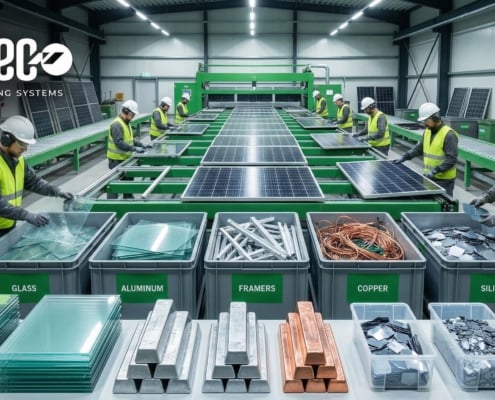
The recycling process involves the removal of panels physical separation, separation of valuable materials and reprocessingIt consists of stages such as.

a. Physical Dismantling

Solar panels glass, metal and plastic It is divided into main components such as. This process allows each material to be processed separately.

b. Glass and Metal Recycling

In the panels pine, going through washing and cleaning processes can be used in the re-glass industry.Similarly aluminum and copper Metals such as these also find use in industry again.

c. Recovery of Silicon

In solar panels silicon It is one of the most valuable components. The recovery of silicon wafers enables it to be reused in the production of new panels while saving energy.

3. Advantages of Recycling

  • Saving Natural Resources: Recycling reduces mining activities by reprocessing raw materials.
  • Reducing Carbon Footprint: Using recycled materials consumes less energy than new materials.
  • Economic Benefits: The recycling sector creates new jobs and creates a sustainable economic system.

4. Challenges Encountered

  • High Recycling Cost: Silicon separation and processing steps can be costly.
  • Limited Recycling Infrastructure: In many parts of the world, solar panel recycling facilities have not yet reached sufficient levels.

5. Recycling Technologies in the Future

In the future, more efficient recycling techniques by developing solar panels easier and more economical recycling New chemical and mechanical processes can increase recovery rates and make the process more sustainable.

Recycling solar panels plays a critical role in the energy systems of the future. Developing and expanding this process would be a major step towards a cleaner and more sustainable world.